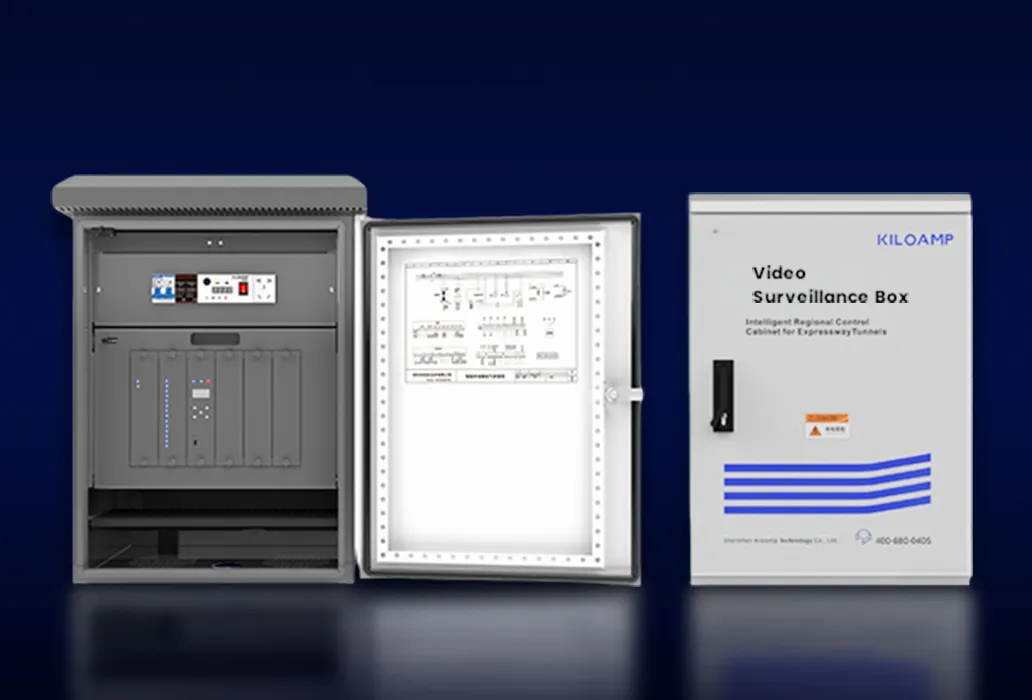




A comprehensive lightning protection solution includes both external and internal systems. External protection consists of lightning rods, conductor belts, down conductors, and grounding grids. Internal protection primarily involves line shielding, equipotential bonding, and the installation of surge protective devices (SPDs) for power and signal lines. Overall, lightning protection is a systematic project that must comply with relevant standards and regulations.
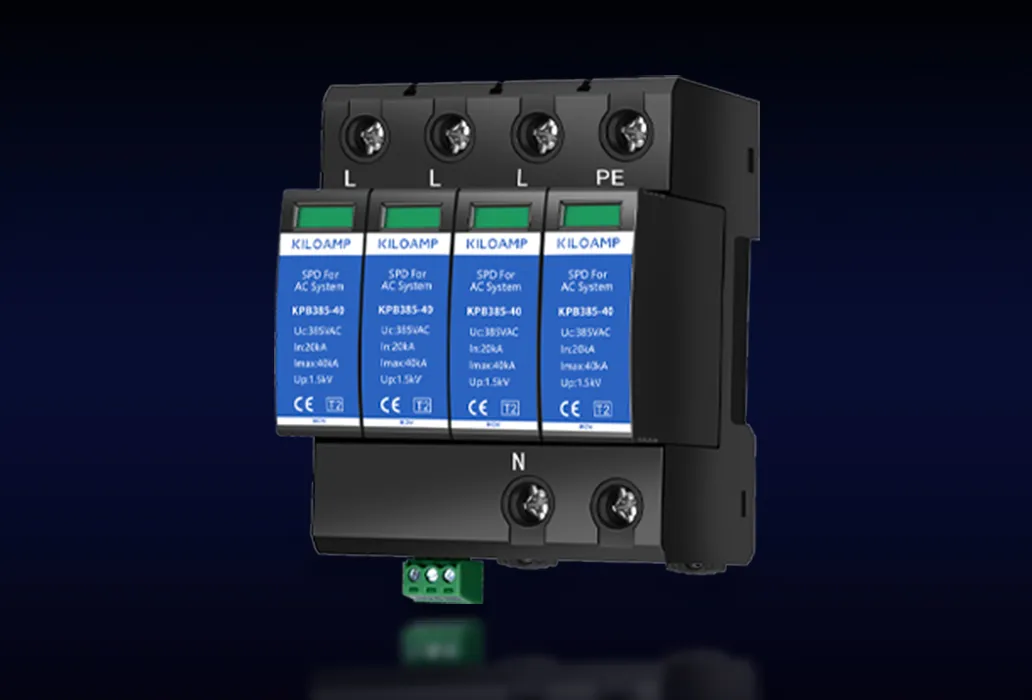
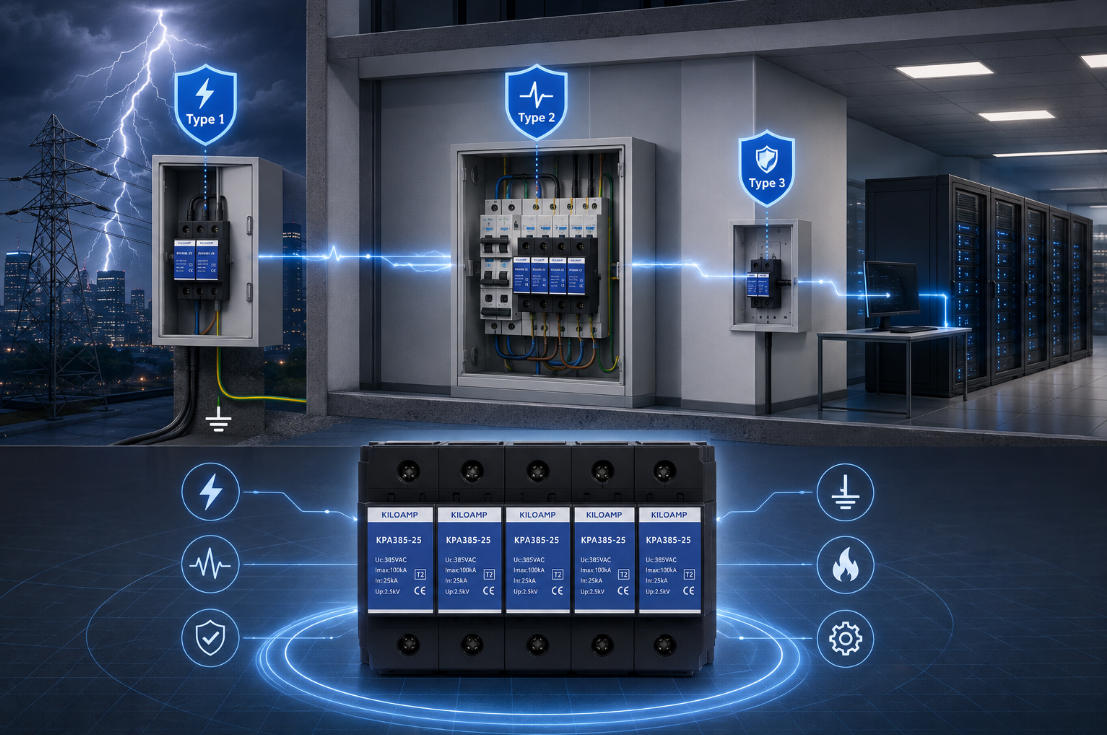
Surge protectors are categorized into power and signal types. Power SPDs use core components like metal oxide varistors (MOVs) or graphite gaps, while signal SPDs rely on gas discharge tubes (GDTs) or transient voltage suppressors (TVS). In general, when a surge exceeds a predefined voltage threshold, the SPD diverts the surge energy to the ground. Under normal operating conditions, SPDs remain inactive and do not interfere with equipment performance.
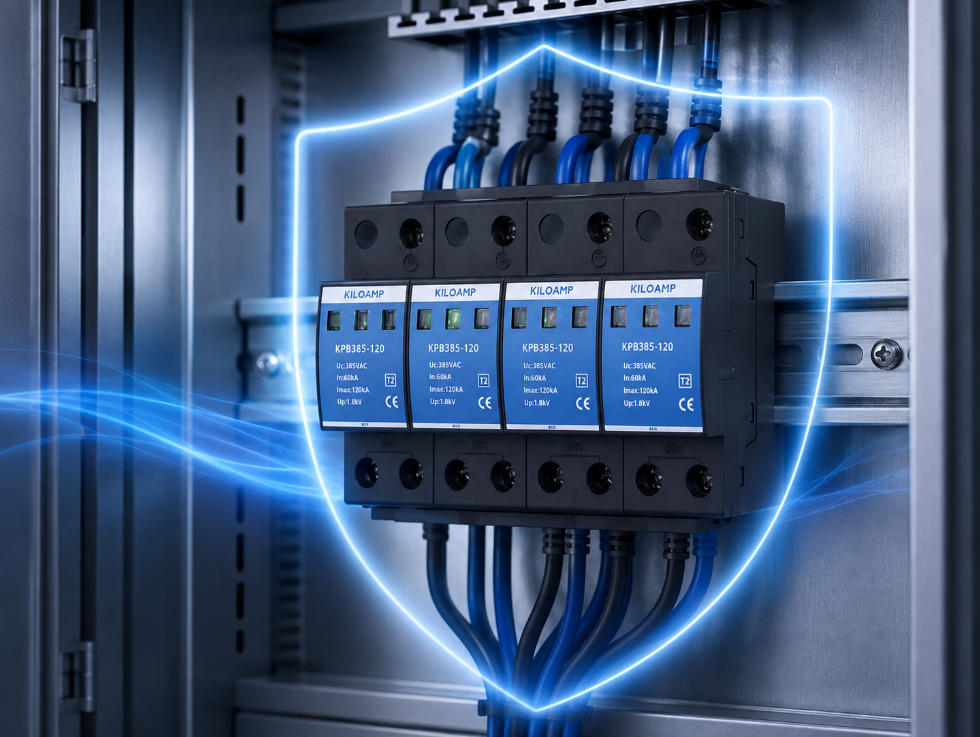
Power SPDs: Typically have an indicator window: green for normal, red for failure. They also include a remote alarm contact for integration into monitoring platforms.
Signal SPDs: Currently lack direct failure detection methods. If signal transmission is interrupted, inspect the SPD for failure.
In all cases, replace failed SPDs immediately to prevent equipment damage from subsequent lightning strikes. Regular maintenance is critical.
Common causes for power SPD failures include:
End of lifespan: SPDs degrade over 5–10 years due to minor leakage currents. Aging increases burnout risk.
Overvoltage: Exceeding the SPD’s maximum continuous operating voltage (Uc) causes short-circuiting. Select SPDs with sufficient voltage margins based on regional power standards.
Internal defects: Poor insulation or unstable resistance values.
Human error: Incorrect installation, maintenance, or misuse.
Yes. Our products are rated IP55+ and operate reliably in extreme temperatures (-40°C to 85°C), making them ideal for factories, data centers, and outdoor infrastructure.
Key differences:
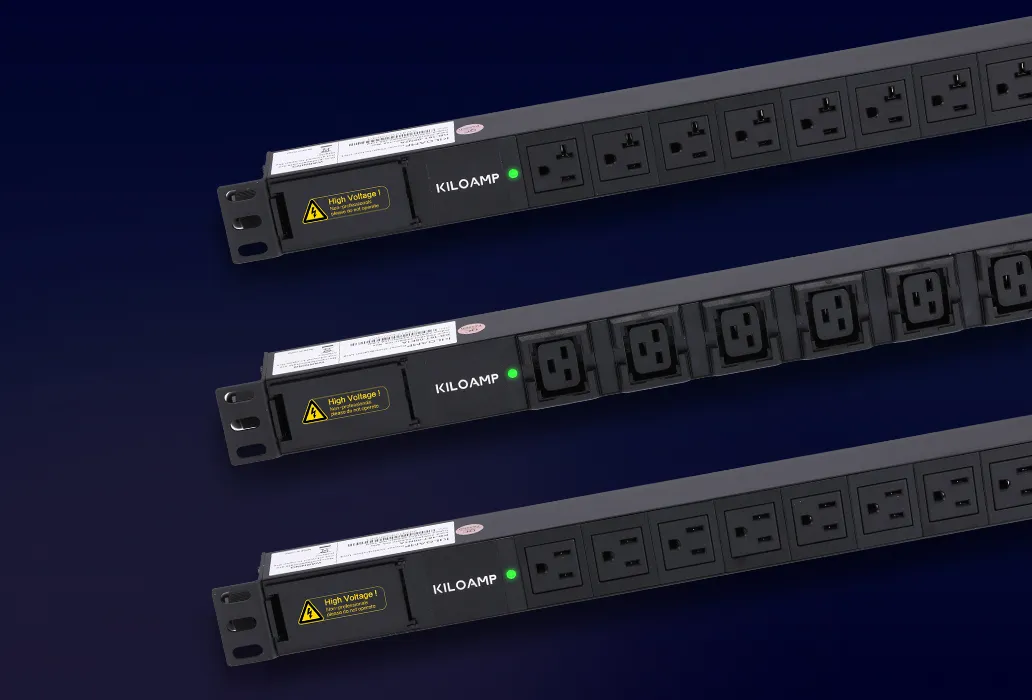
1. High power capacity: PDUs start at 2.5kW, with KILOAMP models exceeding 20kW.
2. Global socket standards: Support IEC, NEMA, BS, and 20+ others.
3. Modular customization: Sockets and functional modules (e.g., surge protection, smart monitoring) are configurable.
4. Advanced features: Overload/voltage protection, DCIM integration, and remote management. Standard outlets lack these capabilities and are unsuitable for rack-level power distribution.
Basic PDUs provide simple power distribution. Smart PDUs add remote monitoring, load balancing, environmental sensing (temperature/humidity), and DCIM integration to reduce manual oversight.
PDU input currents typically range from 10A to 63A. Common copper cable specifications are as follows:
Current Range (A) | IEC Standard (mm²) | NEC Standard (AWG) | Typical Applications |
10A–16A | 2.5 mm² | 14 AWG | Single phase PDU / Low power cabinets |
16A–25A | 4 mm² | 12 AWG | Single phase PDU / Network cabinets |
25A–32A | 6 mm² | 10 AWG | Three phase PDU / Small/medium servers |
32A–40A | 10 mm² | 8 AWG | Three phase PDU / High density cabinets |
40A–50A | 16 mm² | 6 AWG | Industrial PDU / UPS input/output |
50A–63A | 25 mm² | 4 AWG | High voltage PDU / Data center backbone |
We provide multilingual technical support, a service network covering Asia, Europe, and the Americas, and a remote monitoring platform for predictive fault alerts.
Yes. For contracted projects or long-term partnerships, we dispatch professional engineers for on-site installation guidance and training.
Manuals, datasheets, and certification reports are available for download in the "Support Center" on our official website. For localized versions, contact sales@kilolamp.com or reach out to your dedicated sales representative.
Standard orders ship within 5–7 business days. Customized solutions require 3–4 weeks. Exact timelines are confirmed upon order finalization.
We accept bank transfers and PayPal. Bulk orders under long-term partnerships qualify for 30-day payment terms.
Our products are passive components without batteries and use eco-friendly materials, ensuring compliance with global trade regulations.
Certifications include SGS, CE, UL, and third-party approvals in China, meeting global safety and environmental standards.
Yes. All materials comply with EU RoHS and REACH requirements. Compliance certificates are available upon request.
Our products use high-quality components and strict manufacturing processes to minimize defects. For genuine malfunctions, we offer free replacement within 1 year and free repair within 3 years (freight costs borne by the buyer).
Submit a request via our website or email support@kilolamp.com. We prioritize resolution within 24 hours.
Since 2014, we have served clients in over 30 countries/regions. Our expertise spans global trade processes, cultural nuances, and applications in smart buildings, power plants, data centers, and other critical infrastructure.
We adhere to ISO 9001 standards, source components from top-tier brands (e.g., TDK chips), enforce rigorous production controls, conduct 100% functional testing, and implement a full lifecycle traceability system.
Yes. Our smart products support SNMP/IP/RS485 protocols and are compatible with mainstream management platforms. Our engineers assist with custom development.
Submit the "Contact Form" on our website or email sales@kilolamp.com. Customized quotes and partnership proposals are provided within 24 hours.
We currently operate through direct sales or OEM partnerships. For collaboration, contact sales@kilolamp.com directly.
Any needs, questions or concerns, please feel free to Contact Us.
KILOAMP team will get back to you within 24 hours.


 English