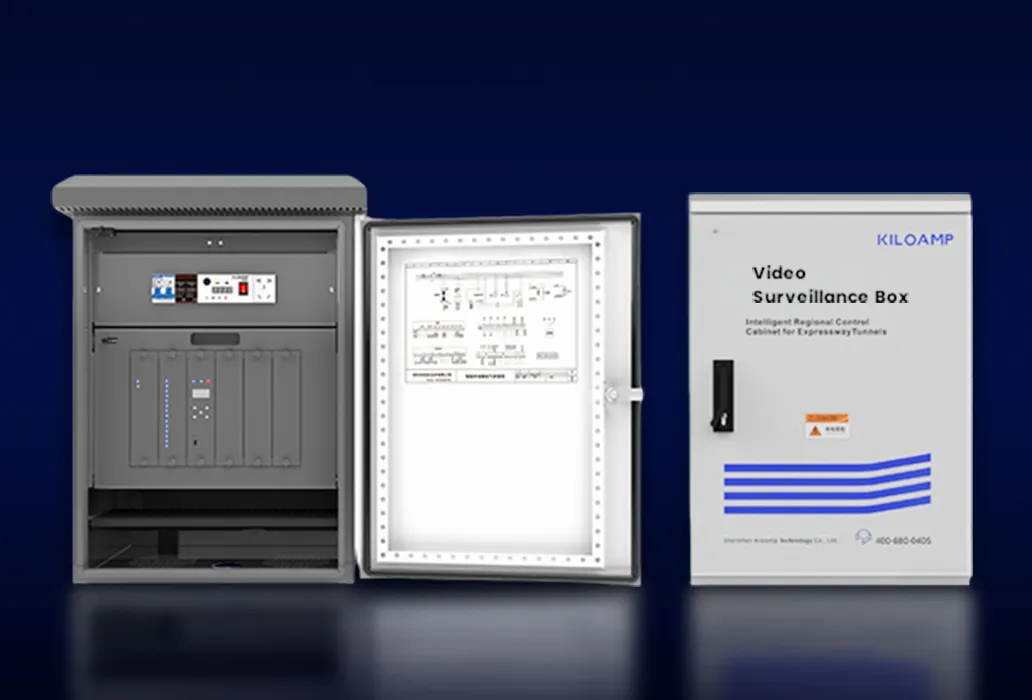


A whole house surge protector is installed at or near a home's main electrical distribution panel to limit transient overvoltage before it reaches appliances, electronics, lighting systems, HVAC equipment, and other connected loads. Unlike a plug-in power strip that protects only nearby devices, whole-house protection provides a broader first line of defense for the electrical system.
Voltage surges can result from nearby lightning events, utility switching, transformer operations, motors, compressors, and large appliances cycling on and off. Although many surges last only microseconds, they can gradually damage sensitive electronic components or cause immediate equipment failure.
For homeowners, electrical contractors, and project buyers, selecting the right surge protection device for home applications requires understanding system voltage, SPD type, discharge current, voltage protection level, grounding, and installation location. KILOAMP develops surge protective devices for residential, commercial, industrial, telecom, and other electrical protection applications.
A whole house surge protector is an electrical protection device installed at the distribution level to divert transient surge current away from circuits and reduce the voltage reaching connected equipment.
The device is normally connected to the home's electrical panel and operates continuously in the background. Under normal voltage conditions, the SPD has little effect on the circuit. When a transient voltage rises above its protection threshold, it rapidly provides a low-impedance path for surge energy and directs that energy toward the grounding system.
A home surge protector at the panel level can help protect refrigerators, televisions, computers, smart home systems, air-conditioning equipment, washing machines, chargers, and other electronics connected throughout the property.
However, no SPD should be viewed as an absolute barrier against every electrical event. Effective residential surge protection depends on correct device selection, reliable grounding, proper installation, and, where necessary, coordinated protection closer to especially sensitive equipment.
Whole house surge protection works by limiting transient overvoltage at the electrical panel and diverting part of the surge current before it spreads through branch circuits.
Most modern SPDs use voltage-sensitive components such as metal oxide varistors. During normal operation, these components remain highly resistive. When voltage rises sharply, their resistance decreases, allowing surge current to flow through the SPD toward earth.
After the transient event has passed, the device returns to its normal operating condition.
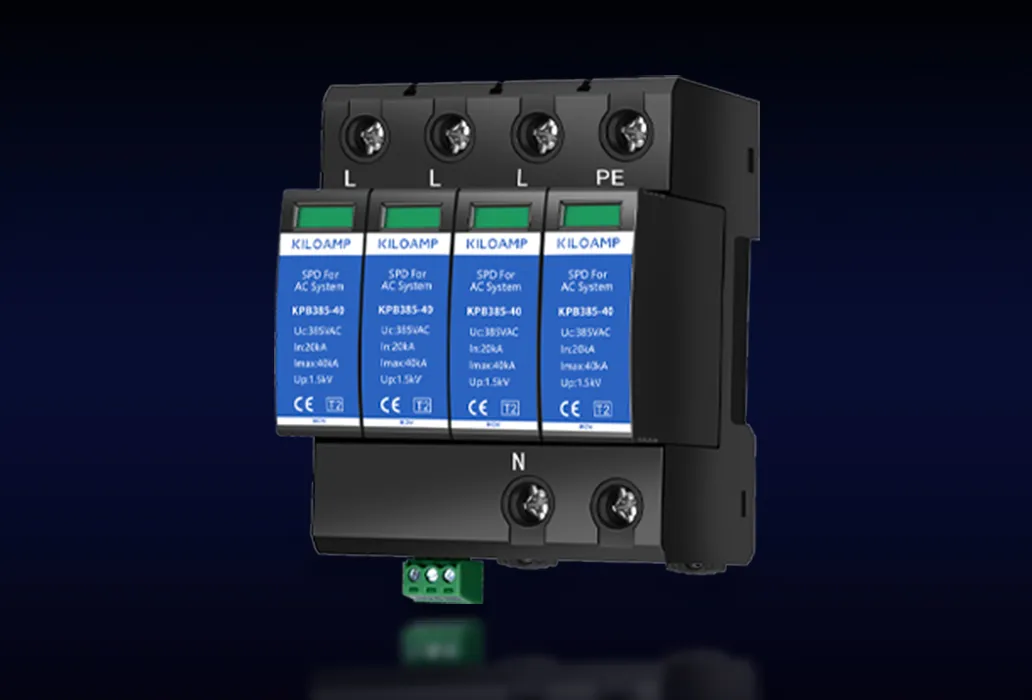
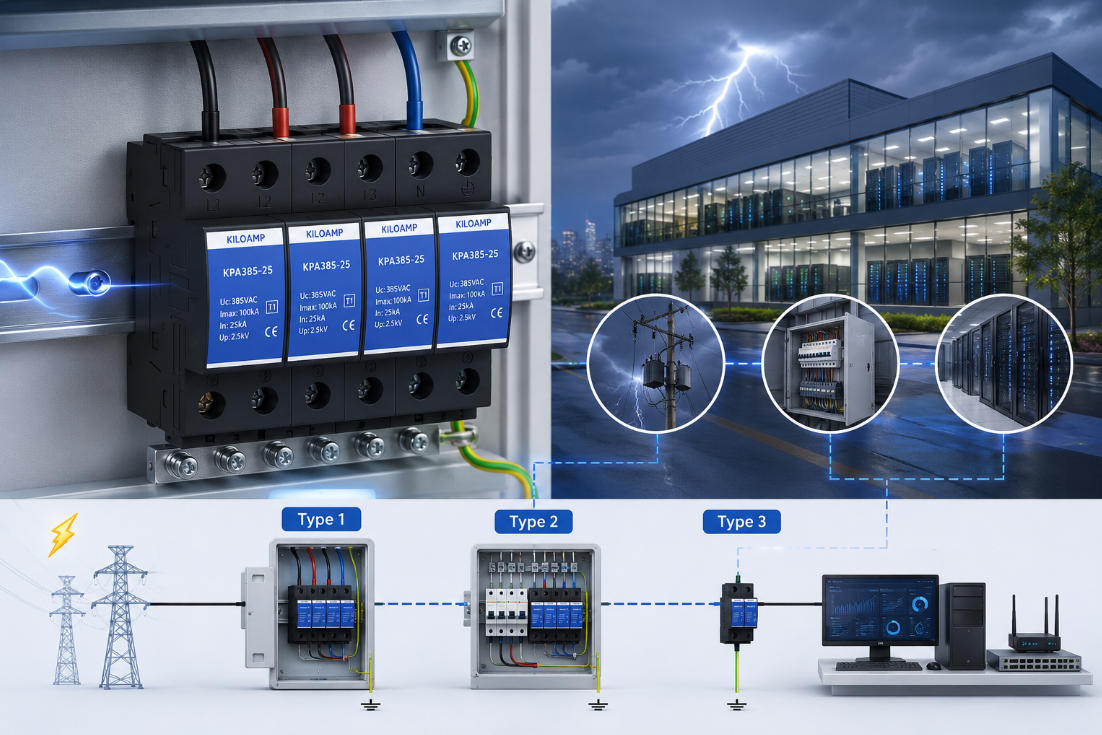
Important ratings include Uc, the maximum continuous operating voltage; In, the nominal discharge current; Imax, the maximum discharge current; and Up, the voltage protection level. These parameters should be considered together rather than selecting a whole house surge protector based only on the largest kA value shown on the label.
Fast response is also important because surge events occur very quickly. Some KILOAMP surge protective devices specify response times of ≤25 ns, allowing the protection component to react rapidly to transient overvoltage.
A whole house surge protector is generally installed at the main electrical panel or a suitable distribution point so that incoming surge energy can be limited before reaching downstream circuits.
Correct installation has a significant influence on SPD performance. Even a properly rated surge protector device for home applications may provide less effective protection if connecting wires are unnecessarily long or the grounding system has excessive impedance.
Important installation considerations include:
Keep SPD conductors as short and direct as practical.
Match the SPD voltage rating to the electrical system.
Confirm compatibility with the grounding arrangement.
Follow manufacturer requirements for backup overcurrent protection.
Position the SPD close to the distribution point it is intended to protect.
Check visual indicators or remote alarm contacts during maintenance.
Installation should be completed according to applicable electrical codes and manufacturer instructions. In higher-risk properties, additional downstream protection may also be used near sensitive electronics to create coordinated surge protection.
A whole house surge protector protects multiple circuits at the electrical distribution level, while a plug-in surge protector primarily protects equipment connected directly to that outlet or power strip.
| Feature | Whole House Surge Protector | Plug-In Surge Protector |
|---|---|---|
| Installation | Main or distribution panel | Wall outlet |
| Protection Scope | Multiple household circuits | Connected devices only |
| Typical Role | Primary distribution-level protection | Equipment-level supplementary protection |
| Suitable Loads | Appliances, HVAC, lighting, electronics | Computers, TVs, chargers |
| Coordination | Can work with downstream SPDs | Often used as final-stage protection |
The two approaches are therefore complementary rather than direct substitutes. A whole house surge protector can reduce surge energy entering the home's branch circuits, while point-of-use devices can provide an additional protection stage for sensitive electronics.
This layered approach is useful because electrical surges can enter from outside the building or originate inside the home when inductive loads such as motors and compressors switch.
Selecting a whole house surge protector requires matching the SPD's electrical ratings, protection level, and configuration to the home's power system and surge exposure.
Buyers should evaluate several factors:
System voltage: The device must match the residential electrical supply.
SPD type: Type 1 or Type 2 solutions may be selected depending on installation location and system design.
Discharge capacity: Review In and Imax according to expected surge exposure.
Voltage protection level: A lower suitable Up can provide better limitation for sensitive equipment.
Pole configuration: Select the correct arrangement for the electrical system.
Status indication: Visual indicators make it easier to identify whether the SPD remains operational.
Grounding quality: Effective surge diversion requires a reliable earth path.
Choosing the highest-rated product without considering voltage compatibility, Up, installation position, and grounding does not necessarily provide better protection.
KILOAMP offers surge protective devices for different voltage levels and electrical environments, allowing contractors and project buyers to configure residential surge protection according to actual system requirements.
A whole house surge protector provides distribution-level protection against transient overvoltage that could otherwise travel through household wiring and damage connected appliances or electronics. It works by rapidly diverting surge current while limiting the voltage reaching downstream circuits.
For effective protection, homeowners and installers should consider SPD type, Uc, In, Imax, Up, grounding quality, and installation position rather than focusing on a single kA rating. A properly selected surge protection device for home applications can also be combined with point-of-use protection for sensitive equipment.
KILOAMP provides surge protection solutions for residential, commercial, telecom, industrial, and other electrical systems, supporting coordinated protection against transient overvoltage.
A whole house surge protector can reduce the risk of transient overvoltage reaching appliances and electronics throughout the property, particularly where lightning or utility switching events are concerns.
It is generally installed at or near the main electrical panel or another suitable distribution point, depending on the system design and SPD type.
It can help reduce transient overvoltage caused by lightning-related surge events, but effective lightning protection may require coordinated SPDs, proper grounding, and other protective measures.
Plug-in devices can provide an additional equipment-level protection stage for sensitive electronics, even when a whole house surge protector is installed.
Check the electrical system voltage, SPD type, In, Imax, Up, pole configuration, grounding requirements, and installation position.
Many modern SPDs include visual status indicators or remote alarm contacts. If the indicator shows failure or degradation, the device should be inspected and replaced according to the manufacturer's instructions.

This is the first one.



 English