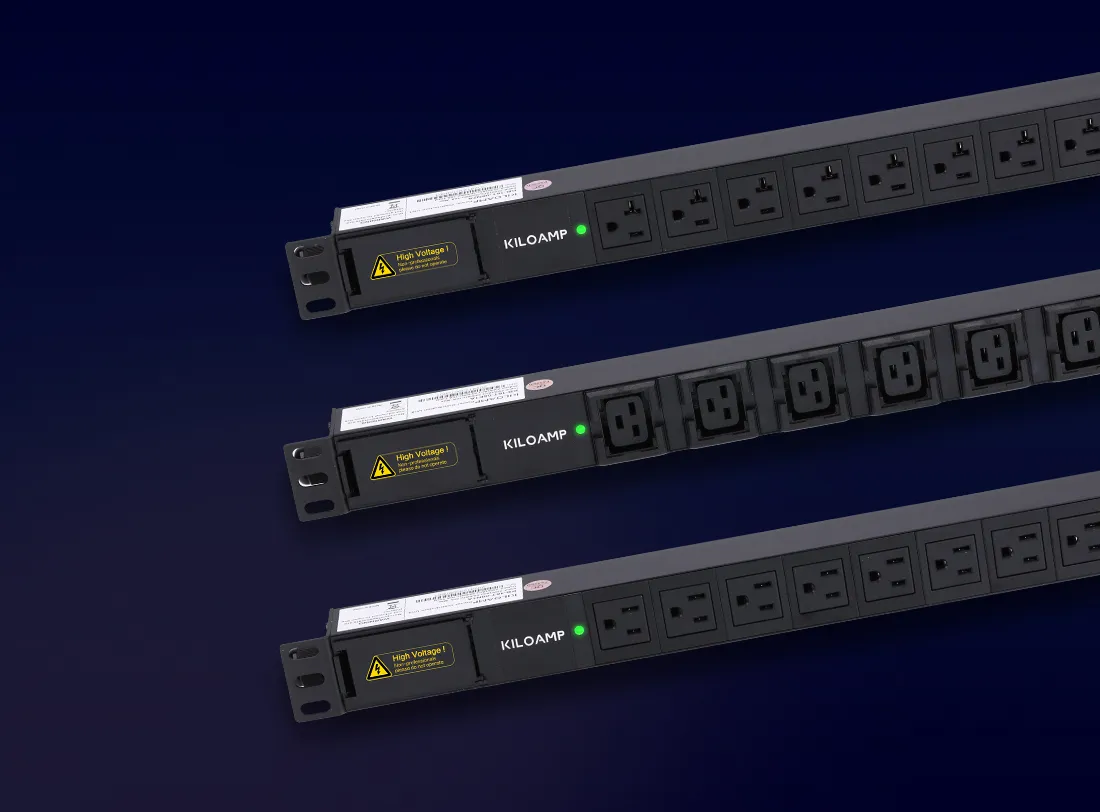


Choosing the right rack power distribution solution is one of the most important decisions in data center cabinet design. A basic rack PDU, a metered PDU, and a smart PDU may look similar from the outside, but they serve different levels of power distribution, monitoring, and remote management.
For B2B buyers, the wrong PDU choice can create hidden costs. A cabinet may lack load visibility, a technician may need more on-site inspections, or future expansion may require replacement instead of a simple upgrade. This guide explains the differences between basic, metered, and smart rack PDU products so engineers and procurement teams can choose a more suitable solution.
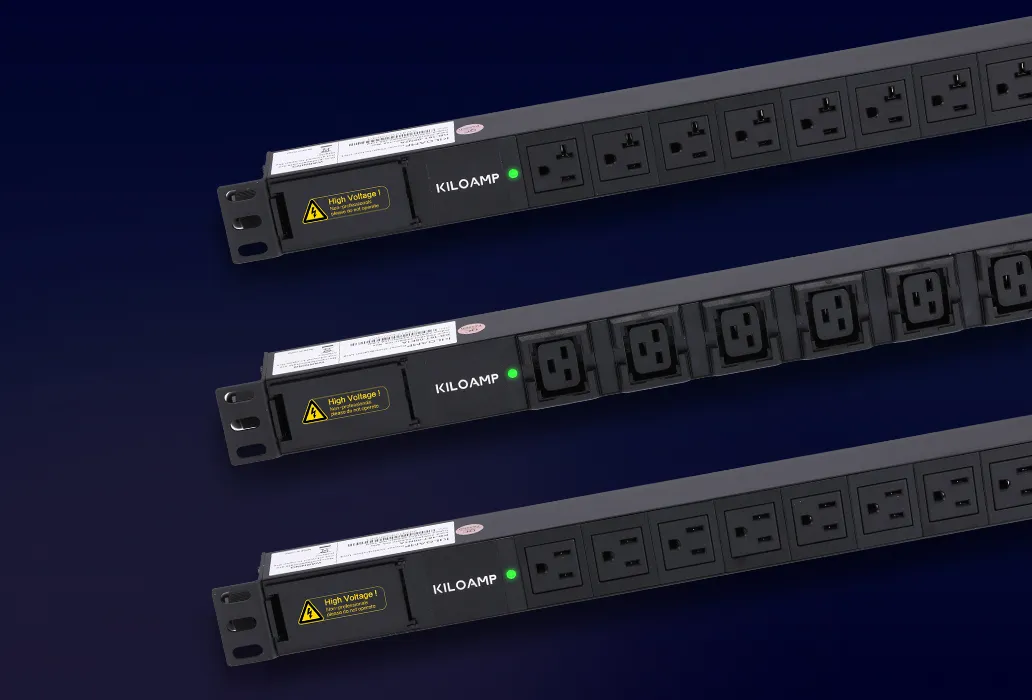
A rack PDU is a cabinet-level device used to distribute electrical power to servers, switches, security equipment, communication devices, and other rack-mounted loads. It can be installed horizontally or vertically inside a rack, depending on cabinet structure and power cable routing.
KILOAMP offers cabinet-level power distribution unit options for data centers, server rooms, network cabinets, security cabinets, and industrial control cabinets. The right model should be selected according to load capacity, outlet type, monitoring requirements, installation method, and protection functions.
A basic rack PDU is designed to provide stable power distribution to multiple devices inside a rack. It is usually the most cost-effective option when the buyer needs reliable output sockets but does not require advanced monitoring or remote outlet control.
Common features of a basic rack PDU include multiple outlet standards, metal housing, rack mounting, input cable options, circuit breaker options, and sometimes surge protection or overload protection. It is widely used in small server rooms, network cabinets, CCTV cabinets, and general equipment racks.
For projects that need straightforward rack power distribution, a basic rack PDU is often the first product category to evaluate.
· Small server racks with predictable power loads
· Network cabinets that do not need remote power monitoring
· Security or CCTV equipment cabinets
· Industrial control cabinets with simple AC power distribution
· Projects where budget control is more important than intelligent management
A metered PDU adds power measurement capability to the basic PDU function. It allows users to view current, voltage, power, or load status, depending on product design. This helps cabinet operators avoid overload and balance power distribution more effectively.
A metered PDU is especially useful when a cabinet has several devices with changing power demand. Before adding new equipment, the operator can check the real load condition instead of guessing. This reduces the risk of tripping breakers or creating an unstable power environment.
· Data center cabinets where load status must be visible
· Server rooms that need overload prevention but not outlet-level control
· Edge cabinets where technicians want quick on-site power readings
· Network racks with multiple device upgrades over time
· Facilities that need a balance between cost and monitoring function
A smart PDU provides more advanced power management functions. Depending on model configuration, it may support remote monitoring, outlet-level control, environmental monitoring, alarm notifications, energy data collection, and communication interfaces.
For data centers and distributed edge sites, the value of a smart PDU is operational efficiency. Teams can monitor cabinet load remotely, identify abnormal power conditions, restart devices without visiting the site, and improve overall power management visibility.
When a project requires real-time power visibility and remote management, KILOAMP’s smart PDU category can be used as the main product reference.
· Medium and large data centers
· Edge data centers with distributed cabinets
· Telecom cabinets requiring remote power status monitoring
· High-value server racks where downtime is costly
· Facilities that need centralized power management and alerts
Selection Point | Basic Rack PDU | Metered PDU | Smart PDU |
Main purpose | Power distribution | Power distribution + load visibility | Power distribution + remote monitoring/control |
Monitoring | Usually not included | Local or simple display monitoring | Remote monitoring, alarms, data reporting |
Outlet control | No | Usually no | Available in switched or intelligent models |
Typical cost | Lowest | Medium | Highest |
Best for | Simple racks and cabinets | Racks needing load awareness | Data centers and remote sites |
Buyer priority | Reliability and price | Safety and load management | Remote operation and uptime |
The best PDU type depends on cabinet function, operating environment, and management requirements. Before choosing a model, buyers should answer these questions:
· How many devices will be connected to the rack?
· What is the total expected power load?
· Is local load monitoring enough, or is remote monitoring required?
· Does the project need outlet-level switching or remote reboot?
· Which socket standard is required: IEC, NEMA, BS, Schuko, CEE, or customized outlets?
· Will the PDU be used in a data center, telecom cabinet, security cabinet, or industrial cabinet?
· Is surge protection, overload protection, or leakage protection required?
For low-risk cabinets, a basic rack PDU may be enough. For cabinets with changing loads, a metered PDU offers a safer middle option. For distributed or high-value infrastructure, a smart PDU can reduce maintenance pressure and improve power visibility.
Outlet count is important, but it is not the only selection factor. Buyers should also check rated current, input plug type, cable length, breaker design, mounting method, and protection functions.
A rack may have low load today but higher load after equipment upgrades. Leaving extra capacity can reduce future replacement cost.
If the cabinet supports critical equipment, lack of load visibility can create operational risk. In this case, a metered PDU or smart PDU may be more suitable.
International projects may require different outlet standards. Confirm IEC, NEMA, BS, Schuko, CEE, or customized sockets before production.
A basic rack PDU distributes power to rack devices. A metered PDU also provides load or power measurement, helping users avoid overload and manage cabinet power more safely.
Not always. A smart PDU is recommended when remote monitoring, outlet control, power alerts, or centralized management are required. For simple cabinets, basic or metered models may be enough.
A small server room can often use a basic rack PDU if the load is stable. If the team needs to monitor load status, a metered PDU is a better choice.
Yes. Depending on model design, a rack PDU can include surge protection, overload protection, circuit breakers, leakage protection, or customized protection modules.
A basic rack PDU, a metered PDU, and a smart PDU each solve a different level of cabinet power management. Basic models focus on reliable distribution, metered models add load visibility, and smart models support remote monitoring and intelligent management.
For B2B projects, the best choice should be based on cabinet load, operational risk, monitoring needs, outlet standard, protection requirements, and future expansion. KILOAMP can support rack PDU selection and customization for data centers, telecom cabinets, security systems, and industrial cabinet power distribution projects.



 English