

Understanding different surge protective device types is essential when designing an effective electrical protection system. Type 1, Type 2 and Type 3 surge protective devices are not interchangeable products; each is intended for a different installation position and level of transient surge exposure.
In commercial buildings, telecom facilities, industrial control systems, data centers and outdoor electrical installations, surge energy may enter through incoming power lines or be generated by switching operations inside the electrical network. Choosing the correct types of surge protection helps reduce the risk of equipment damage, communication interruption and unexpected downtime.
KILOAMP develops surge protection solutions for power, signal, RF, telecom and industrial applications, supporting coordinated protection from incoming distribution systems to sensitive terminal equipment.
Surge protective device types matter because different locations in an electrical system are exposed to different surge energy levels and therefore require different protection capabilities.
A surge entering a building at the service entrance can carry significantly more energy than the residual transient that reaches sensitive equipment farther downstream. Using only one SPD at one location may therefore leave other parts of the electrical installation insufficiently protected.
Type 1 is primarily intended for high-energy surge currents near the service entrance. Type 2 is commonly installed in distribution panels to control residual or switching surges, while Type 3 provides fine protection close to sensitive equipment.
A coordinated system progressively reduces surge energy as it moves through the installation. This staged approach is particularly valuable in facilities containing PLCs, servers, telecom equipment, monitoring systems and other electronics with relatively low impulse withstand levels.
| SPD Type | Typical Installation Location | Main Protection Function | Common Applications |
|---|---|---|---|
| Type 1 | Service entrance / main panel | Discharges high-energy lightning current | Exposed buildings, main distribution |
| Type 2 | Main or sub-distribution panel | Limits residual and switching surges | Industrial panels, telecom, commercial buildings |
| Type 3 | Near terminal equipment | Fine protection against residual overvoltage | Servers, PLCs, instruments, electronics |
A Type 1 SPD is designed for installation near the origin of the electrical system where high-energy lightning currents may enter the building or facility.
A Type 1 surge protector is typically selected for installations with higher lightning exposure, external lightning protection systems or incoming overhead power lines. Its role is to divert a substantial portion of the surge current before it propagates into downstream distribution circuits.
Type 1 devices are generally evaluated using impulse current parameters such as Iimp. Because they must withstand higher-energy events, their protection role differs from that of Type 2 and Type 3 devices.
Typical applications include telecom stations, industrial facilities, exposed infrastructure and buildings where direct or nearby lightning effects represent a significant electrical risk. In these environments, a Type 1 SPD normally serves as the first stage of a coordinated surge protection system rather than the only protective device.
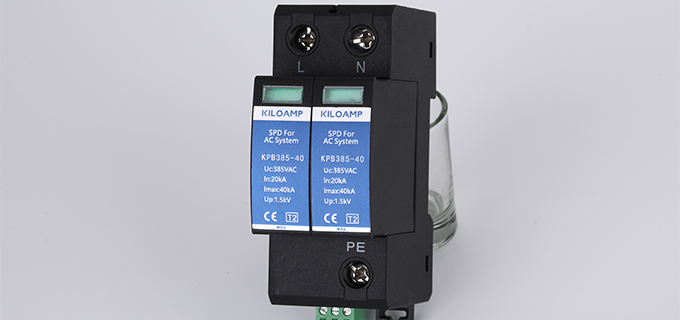
A Type 2 SPD is a distribution-level surge protector designed to reduce transient overvoltage caused by indirect lightning effects and electrical switching events.
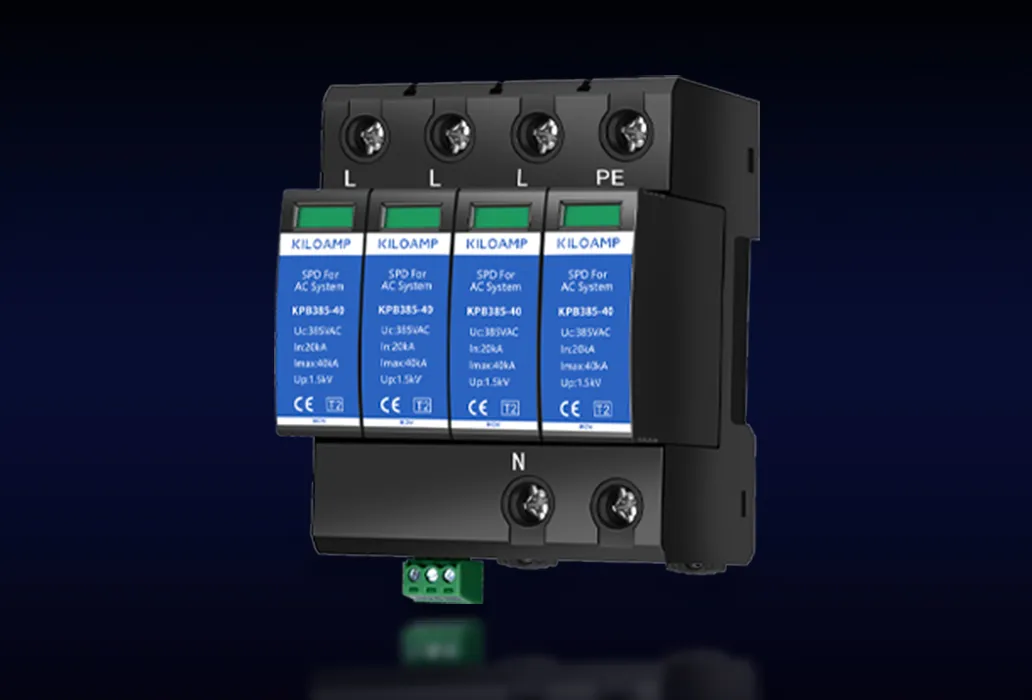
The Type 2 surge protector is one of the most commonly installed devices in low-voltage electrical systems. It is generally positioned in main distribution panels, sub-distribution boards and industrial control cabinets.
Unlike Type 1 devices, Type 2 SPDs are primarily selected according to parameters such as nominal discharge current (In), maximum discharge current (Imax), maximum continuous operating voltage (Uc) and voltage protection level (Up).
Type 2 protection is widely used for commercial buildings, data centers, CCTV systems, automation panels, telecom equipment and energy installations. It can provide the intermediate protection stage between incoming lightning-current protection and sensitive terminal electronics.
For many projects, Type 2 is therefore the central element of a multi-level SPD system. However, the correct rating should always be selected according to system voltage, grounding configuration and expected surge exposure rather than simply choosing the highest available kA value.
A Type 3 SPD is installed close to sensitive terminal equipment to provide fine protection against residual transient overvoltage that remains after upstream surge protection.
A Type 3 SPD typically protects devices such as servers, PLCs, communication equipment, monitoring instruments, security systems and other sensitive electronics. Because it operates at the equipment level, it is designed for lower residual surge energy than Type 1 or Type 2 devices.
A surge protection device Type 3 should generally be coordinated with upstream protection. Installing a Type 3 device alone at the end of a circuit may not provide sufficient protection where the electrical system is exposed to significant lightning or switching surges.
The main purpose of Type 3 protection is therefore not to replace Type 1 or Type 2, but to reduce the remaining transient voltage closer to the protected load. This is particularly useful where sensitive electronic equipment requires a lower protection level than the distribution network alone can provide.
KILOAMP offers surge protection solutions for different installation stages, allowing engineers to create coordinated protection according to system risk and equipment sensitivity.
Choosing the correct SPD type requires evaluating installation location, lightning exposure, system voltage, discharge capability and the sensitivity of downstream equipment.
Before selecting among different surge protective device types, engineers should consider:
Installation position: Determine whether protection is needed at the service entrance, distribution level or close to equipment.
Lightning exposure: Buildings with external lightning protection or exposed incoming lines may require Type 1 protection.
Electrical ratings: Check Uc, Up, In, Imax and Iimp where applicable.
Protected equipment: Sensitive electronics may require additional Type 3 protection.
Grounding and wiring: A reliable grounding path and short SPD connections are critical to effective protection.
Protection coordination: Type 1, Type 2 and Type 3 devices should work together where multiple protection stages are required.
The best solution is not always a single high-capacity SPD. Effective protection depends on selecting the correct type and installing it at the correct position. KILOAMP supports power, signal and communication surge protection applications, helping engineers configure protection according to the actual electrical environment.
The three main surge protective device types are Type 1, Type 2 and Type 3, corresponding broadly to service-entrance, distribution-level and equipment-level protection.
A Type 1 surge protector is used near the electrical service entrance to handle higher-energy lightning currents before they travel farther into the installation.
A Type 2 surge protector is commonly installed in main or sub-distribution panels, control cabinets and other low-voltage distribution points.
A Type 3 SPD provides fine surge protection for sensitive terminal equipment such as servers, PLCs, instruments and communication devices.
Yes. Type 2 and Type 3 SPDs are commonly coordinated so that the Type 2 device reduces surge energy at the distribution level and the Type 3 device provides additional protection near sensitive equipment.
The correct choice depends on lightning exposure, installation location, system voltage, grounding configuration and equipment sensitivity. High-risk installations may require coordinated Type 1, Type 2 and Type 3 protection.
Understanding surge protective device types is critical for building an effective multi-stage surge protection system. A Type 1 surge protector manages higher-energy lightning current at the incoming supply, a Type 2 surge protector controls residual and switching surges at distribution level, and a Type 3 SPD provides fine protection close to sensitive electronics.
Rather than selecting one SPD for an entire facility, engineers should evaluate the electrical system as a complete protection chain. KILOAMP provides surge protection solutions for power, communication, RF, telecom and industrial systems, helping projects select and coordinate the appropriate types of surge protection for different applications.



 English