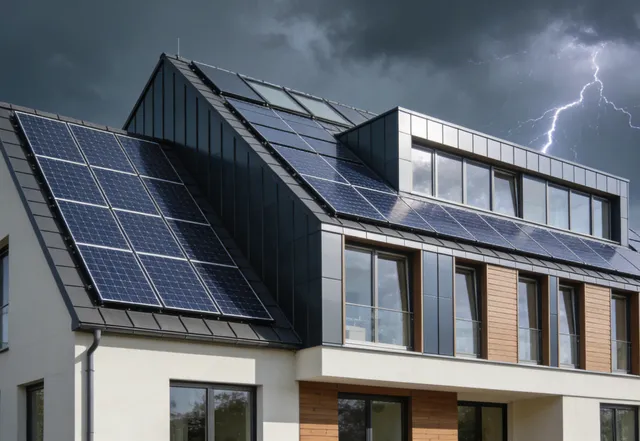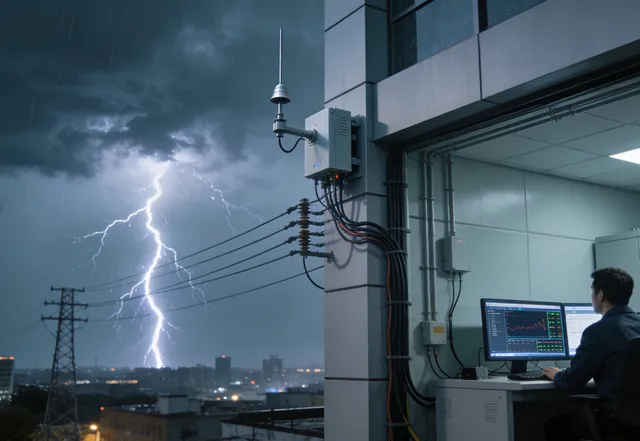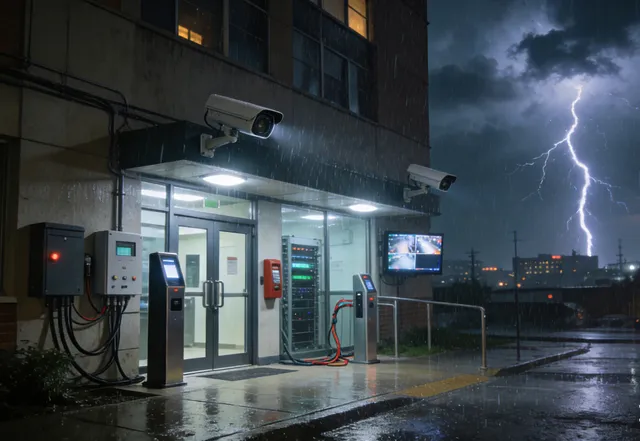


In contemporary society, buildings serve as crucial urban infrastructures that integrate technologies such as IoT, AI, and new energy sources, making their safe operation particularly significant. Not only do buildings house a large number of electrical devices, but they are also important venues for human activities. Lightning strikes, being a common natural disaster, pose a serious threat to these infrastructures.
The lightning protection system of buildings is essential for ensuring the safety of both the building and its internal equipment. It is primarily divided into external and internal lightning protection systems. External lightning protection focuses on preventing direct lightning strikes from damaging buildings, while internal lightning protection aims to safeguard the electrical equipment and people inside by protecting against lightning induction and lightning wave intrusion. By appropriately configuring power surge protectors, signal surge protectors, feeder arresters, and lightning monitoring systems for subsystems like power supply and distribution, security low voltage, and server rooms, comprehensive lightning protection can be provided to buildings. This ensures that buildings can operate safely and stably during severe weather conditions like thunderstorm seasons.
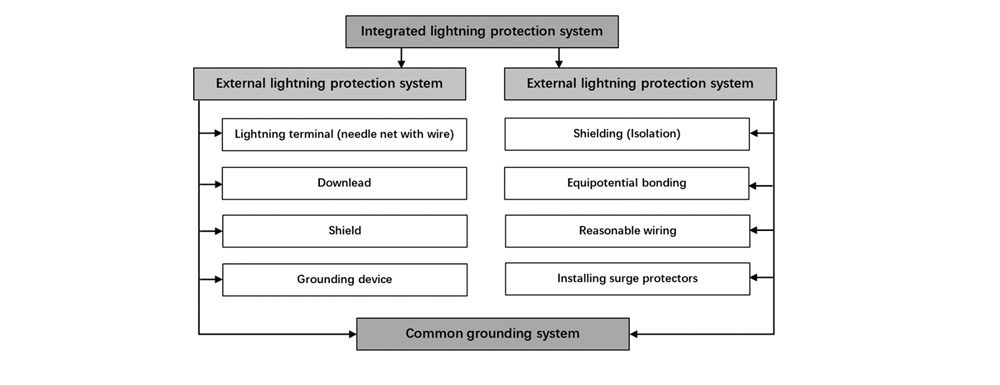
The external lightning protection system consists of air terminals, down conductors, and grounding devices. Its function is to guide lightning directly into the earth to prevent damage to buildings caused by direct lightning strikes. Air terminals include lightning rods, lightning tapes, and lightning mesh. Down conductors made of galvanized round steel or flat steel are laid along the exterior walls with at least two per building to distribute lightning currents. The grounding device comprises horizontal and vertical grounding elements, with commonly used materials including metal grounding electrodes (such as copper-clad steel, hot-dip galvanized angle steel) and non-metallic grounding electrodes (such as graphite grounding electrodes). Depending on the lightning protection level of the building, different requirements for grounding resistance exist, generally ranging from 1-4Ω.
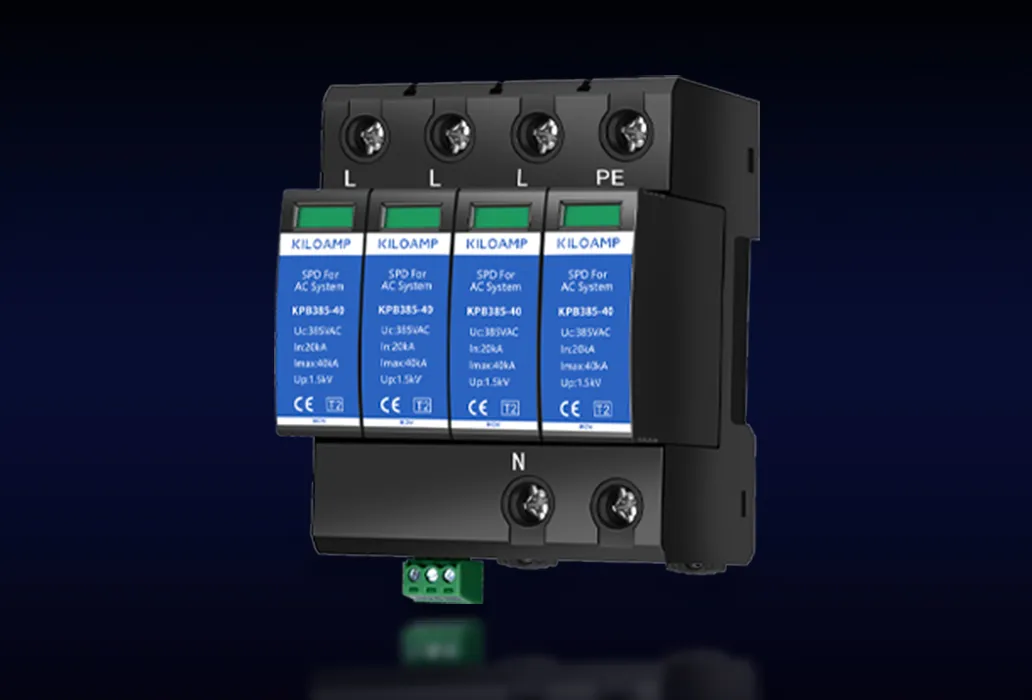
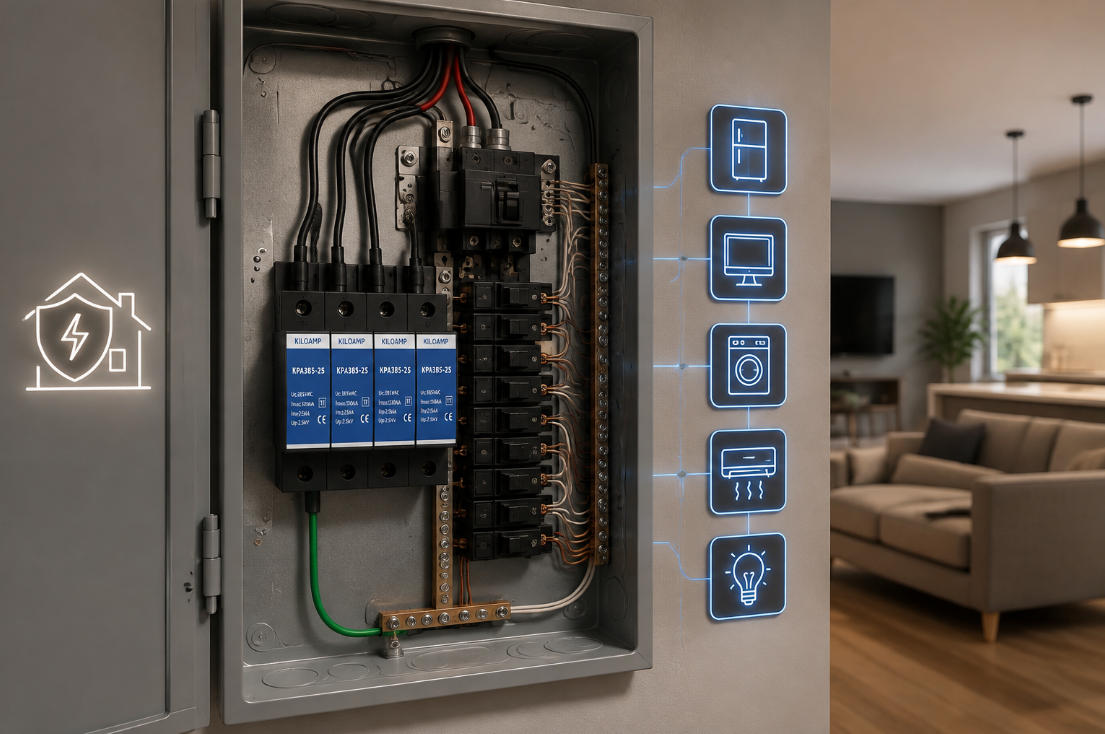
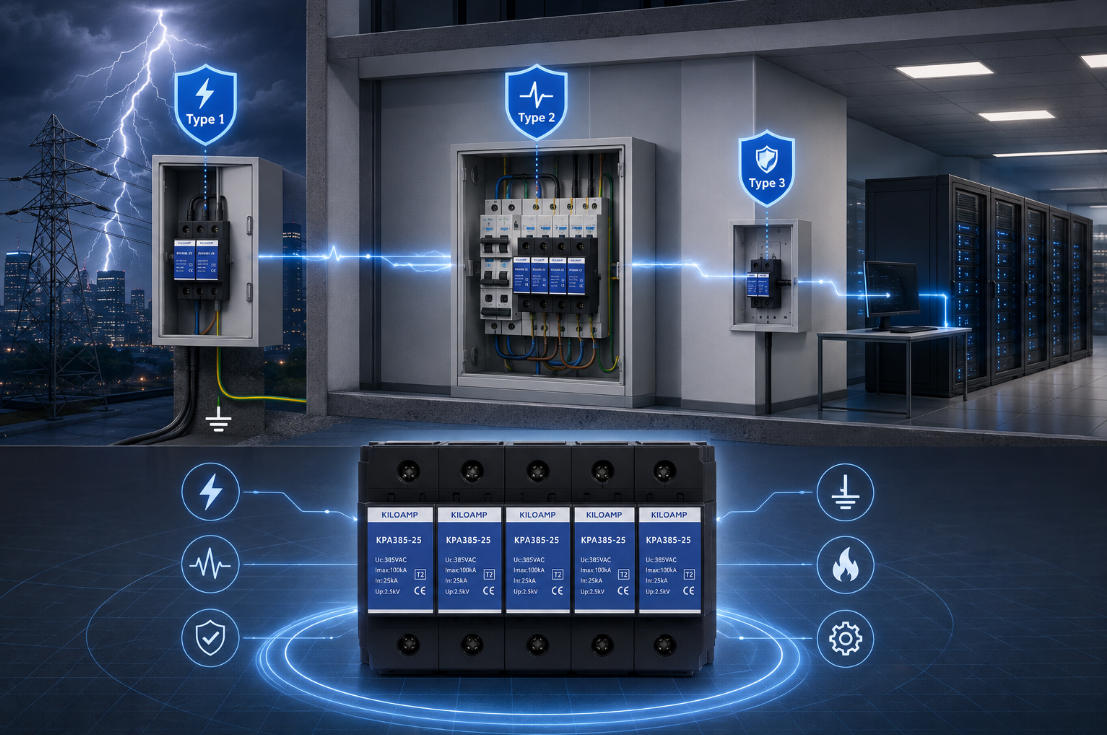
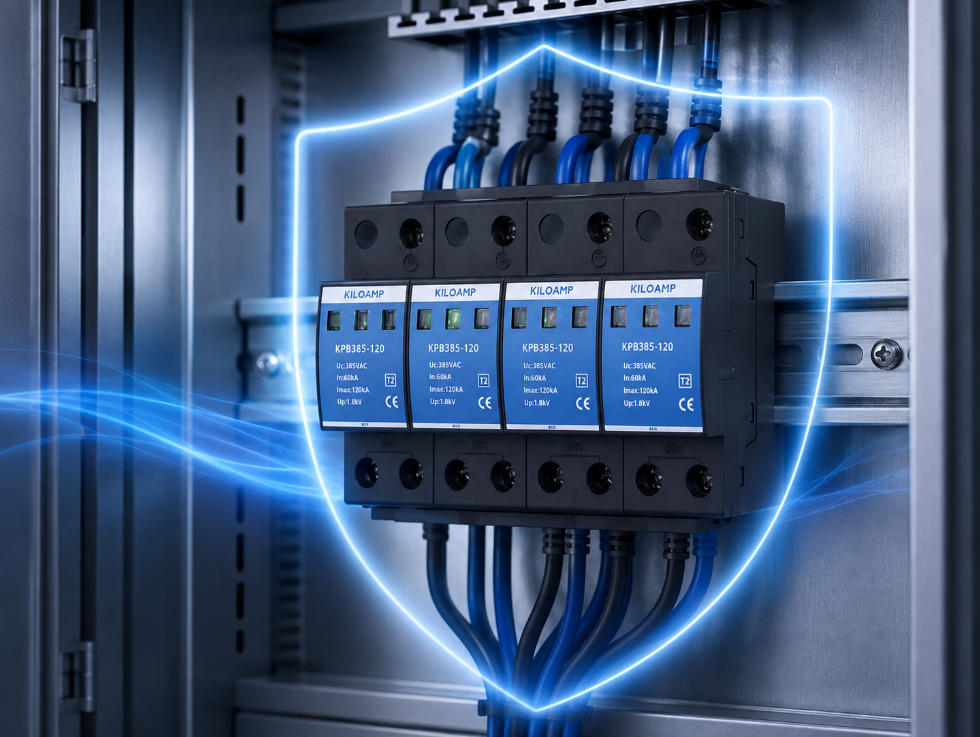
Internal lightning protection systems, besides measures like equipotential bonding, shielding, and proper wiring, installing surge protective devices (SPDs) to prevent lightning induction and lightning wave intrusion is particularly important. Equipotential bonding connects metal components and equipment casings to the grounding busbar to ensure consistent potential. Shielding measures involve setting up metallic shielding nets on the exterior walls and roofs, using shielded cables for communication and power lines which are then grounded. Proper wiring requires separating power and signal lines, with important circuits using armored cables or conduits for laying, grounded at both ends to reduce induced overvoltage. Common surge protective devices found in buildings include AC power surge protectors, DC power surge protectors, network signal surge protectors, RS485 signal surge protectors, feeder arresters, and lightning monitoring systems. All surge protectors must be grounded nearby; KILOAMP's surge protectors can be connected to a monitoring platform for intelligent maintenance.
In conclusion, the lightning protection system of buildings is a key measure for ensuring the safety of buildings, their internal equipment, and occupants. By reasonably configuring external lightning protection devices (air terminals, down conductors, grounding devices) and internal lightning protection devices (equipotential bonding, shielding, proper wiring, surge protective devices), the threat of lightning disasters to buildings can be effectively reduced.


 English