

With the rapid development of intelligent transportation technology, there is a growing demand for smart infrastructure across urban areas, which must operate 24/7. One of the most significant threats to these systems is lightning-induced surges, making lightning protection critical for traffic control systems.
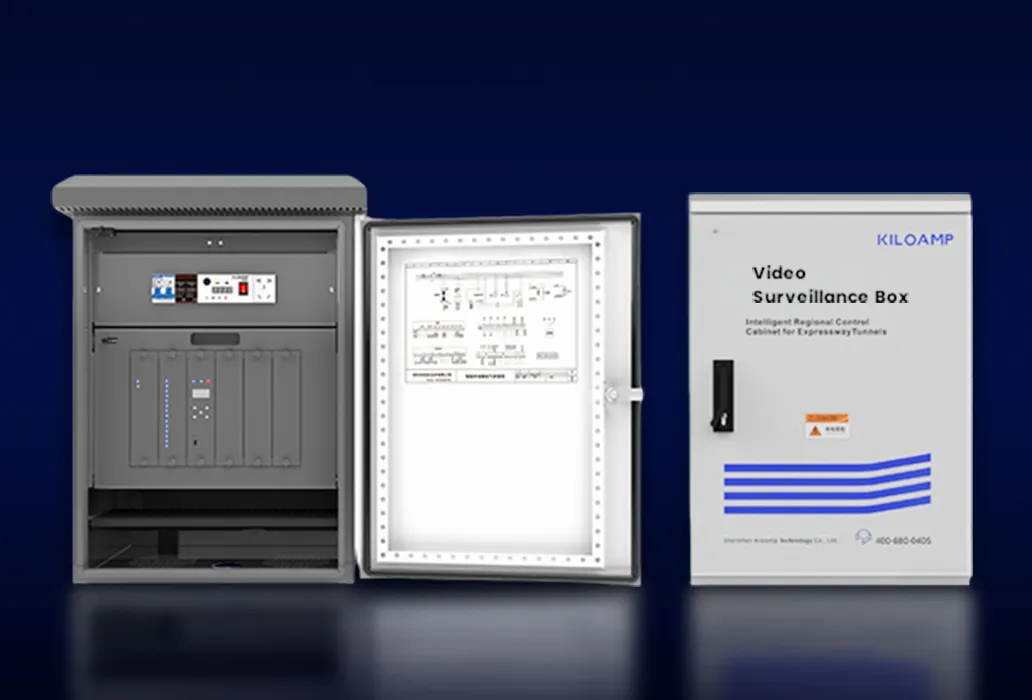
Traffic control systems consist of power distribution networks, control systems, display systems, video surveillance, sensing devices, and communication systems. Key equipment requiring protection includes traffic signal controllers, distribution cabinets, LED displays, traffic lights, IP cameras, industrial switches, and radar units. The primary focus of protection is safeguarding power supply and signal lines.
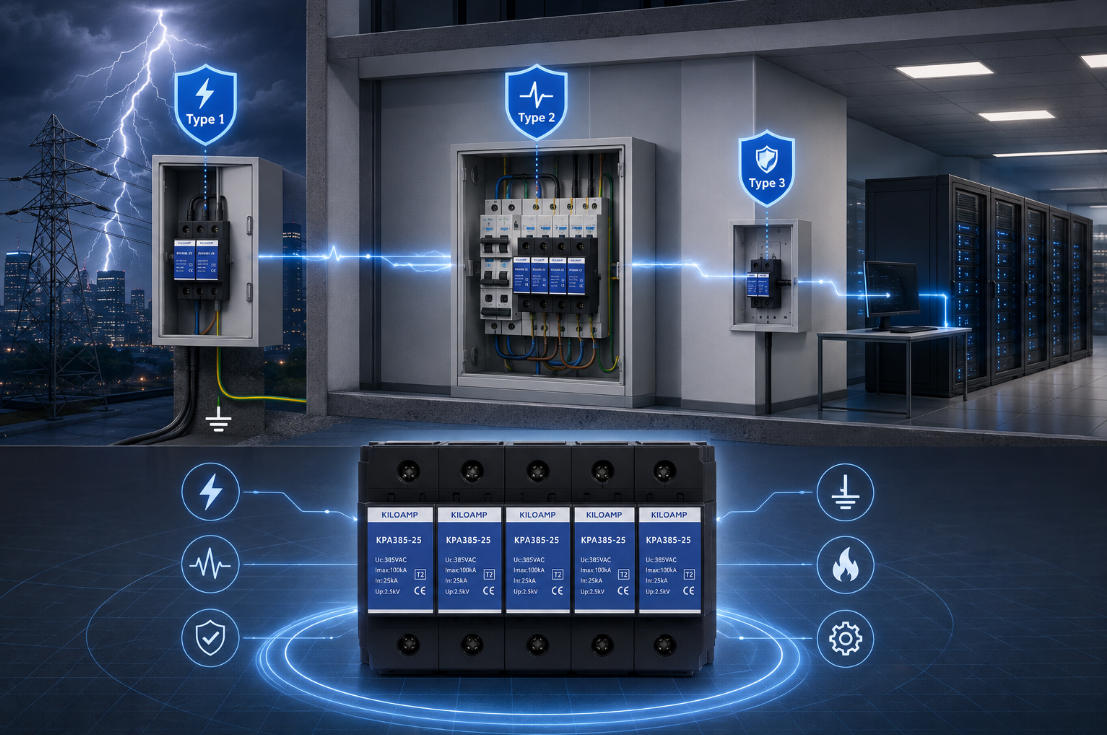
Traffic control systems typically draw power from nearby municipal grids, necessitating tiered surge protection at critical nodes:
Protection Level | Installation Position | SPD Specifications | Recommended Model |
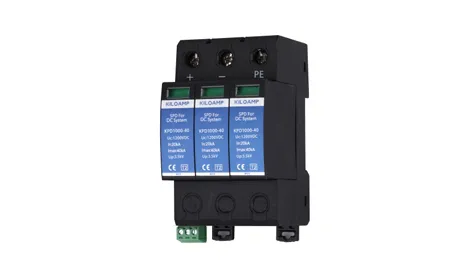
Primary | Low-voltage distribution box | Switching-type SPD, ≥25kA (10/350μs), Up ≤2.5 kV | KILOAMP KPA385-2540R |
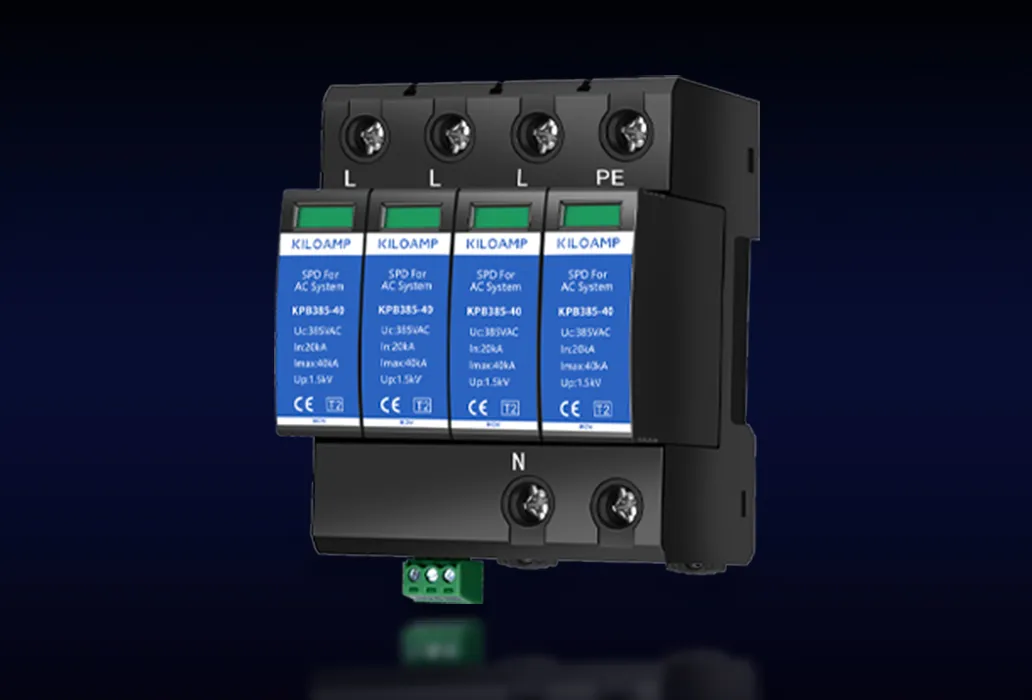
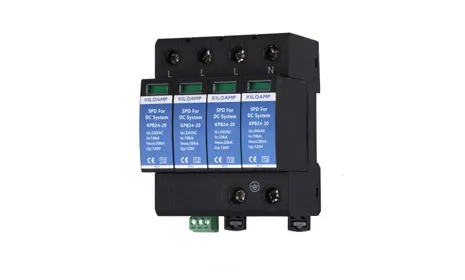
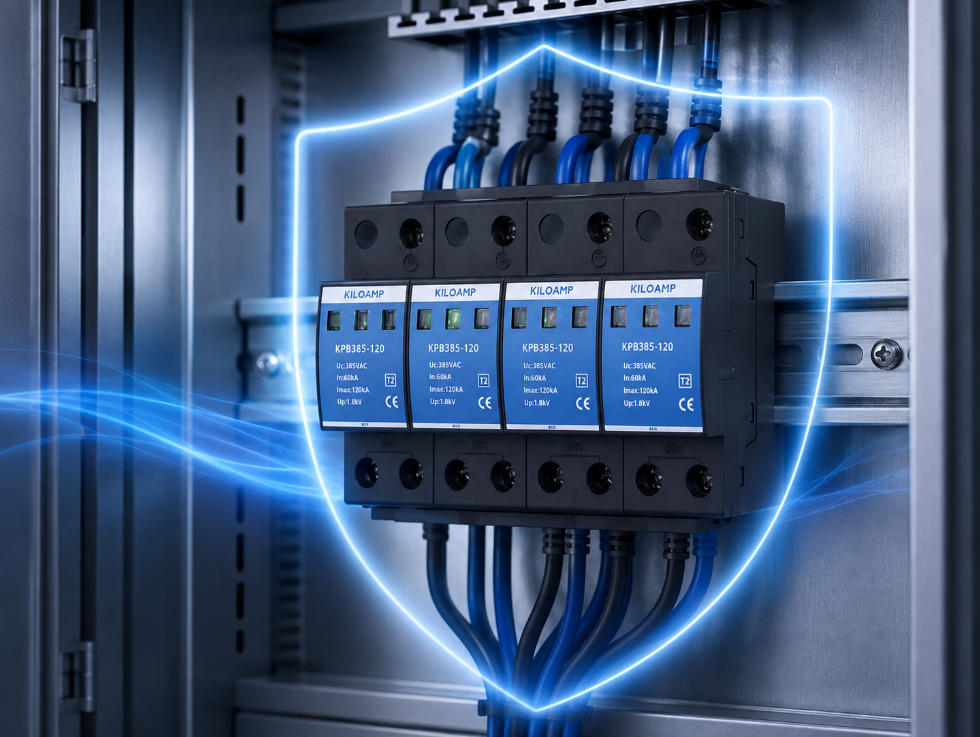
Secondary | Traffic control boxes, LED cabinets | Voltage-limiting SPD, ≥40kA (8/20μs), Up ≤1.8 kV | KILOAMP KPB385-10040R |
Tertiary | Critical devices (signal controllers, LED displays, cameras, radar) | Precision SPD, ≥10kA (8/20μs), Up ≤1.2 kV | KILOAMP KPB385-4040R |
Implementation Notes:
1. Install backup circuit breakers or fuses (matched to SPD nominal current) at the SPD front end.
2. SPD grounding wires must be ≤50cm long, with cable cross-section ≥6 mm².
Traffic control systems use diverse communication protocols and interfaces (e.g., RJ45 and RS485). Surge protectors must be selected based on the device’s communication protocol and interface type. Both ends of signal lines (e.g., cameras and industrial switches) require protection.
Equipment Type | Signal Type | Key Parameters | Recommended Model |
Traffic Signal Controller | RJ45 | Uc: 5V, Imax: 5kA, auto-adaptive (10/100/1000Mbps), single port | KSE05-401 |
RS485 | Uc: 5V, Imax: 5kA, auto-adaptive (10/100/1000Mbps) | KSC24-201 | |
IP Camera | RJ45 | Uc: 5V, Imax: 5kA, auto-adaptive (10/100/1000Mbps), single port | KSE05-401 |
PoE RJ45 | Uc: 48V, Imax: 5kA, auto-adaptive (10/100/1000Mbps), single port | KSP48-801 | |
LED Display | RJ45 | Uc: 5V, Imax: 5kA, auto-adaptive (10/100/1000Mbps), single port | KSE05-401 |
Millimeter Wave Radar | RJ45 | Uc: 5V, Imax: 5kA, auto-adaptive (10/100/1000Mbps), single port | KSE05-401 |
Industrial Switch | RJ45 (8 ports) | Uc: 5V, Imax: 5kA, auto-adaptive (10/100/1000Mbps), 8 ports | KSE05-401 |
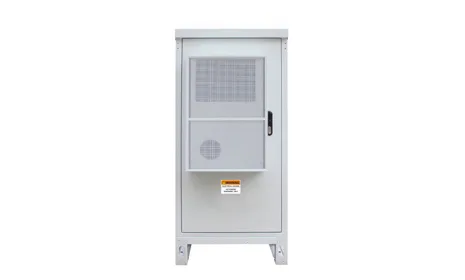
Most surge protectors for traffic systems are installed in outdoor enclosures or pole-mounted cabinets, which often face grounding challenges due to high soil resistivity and limited space. Key requirements include:
Materials: Use hot-dip galvanized angle steel or flat steel for grounding.
Grounding:
Enclosure casings and SPDs must be grounded locally.
Grounding resistance should be ≤10Ω.
Lightning rods: Leverage existing poles as natural air terminals; ensure proper grounding.
Cable Management:
Separate power and signal lines.
Use galvanized steel conduits for shielding.
Protection Strategy: Combining shielding, grounding, and tiered SPD protection reduces lightning surge damage to ≤1%.
Summary and Recommendations
1. Power Distribution:
Three-tiered SPD protection (primary, secondary, tertiary).
Match SPDs to equipment voltage and current ratings.
2. Signal Systems:
Select SPDs based on communication protocols (RJ45/RS485).
Protect both ends of signal lines.
3. Grounding:
Prioritize low-resistance grounding (≤10Ω).
Use galvanized steel for durability.
4. Shielding:
Separate power and signal lines.
Use metallic conduits for cable runs.
By integrating these measures, traffic control systems can achieve robust lightning surge protection, ensuring stable operation and minimizing risks.
Note: Customize grounding designs based on site-specific soil conditions. Regular inspections and maintenance are critical for long-term reliability.


 English