

Water treatment plants play a critical role in modern society by purifying raw water through advanced technologies to remove impurities, harmful substances, and microorganisms, ensuring safe drinking water. With increasing water demand and advancements in automation and smart technologies, water treatment processes have become highly automated. However, critical control equipment—such as programmable logic controllers (PLCs), sensors, and motors—are increasingly vulnerable to damage from lightning surges and power fluctuations.
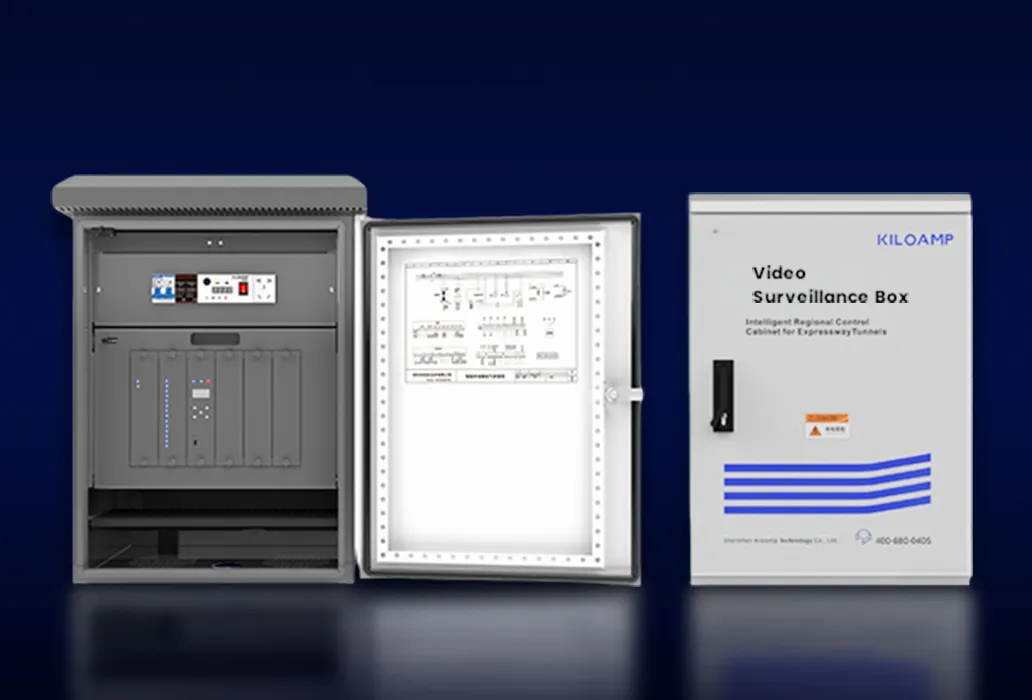
Key processes requiring protection include raw water pumping stations, sedimentation tanks, V-shaped filters, chemical dosing rooms, and finished water pumping stations. While external lightning protection (e.g., lightning rods, grounding, and shielding) is essential for buildings, the core focus is on safeguarding power distribution systems, automation control systems, and security systems within each process segment. Critical equipment such as PLCs, flow meters, analytical instruments, motors, and IP cameras must be prioritized.
The power distribution system in water plants must protect critical nodes:
Transformer (10kV/0.4kV) in the main substation.
Low-voltage distribution cabinets (MCC) for each process segment.
Control rooms and critical control equipment.
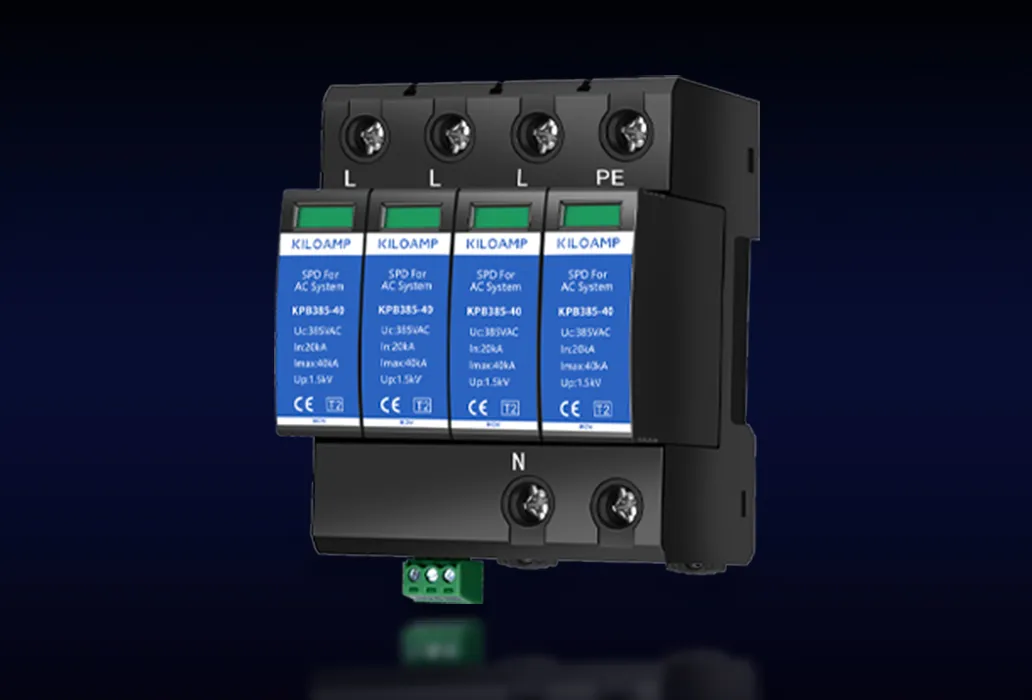
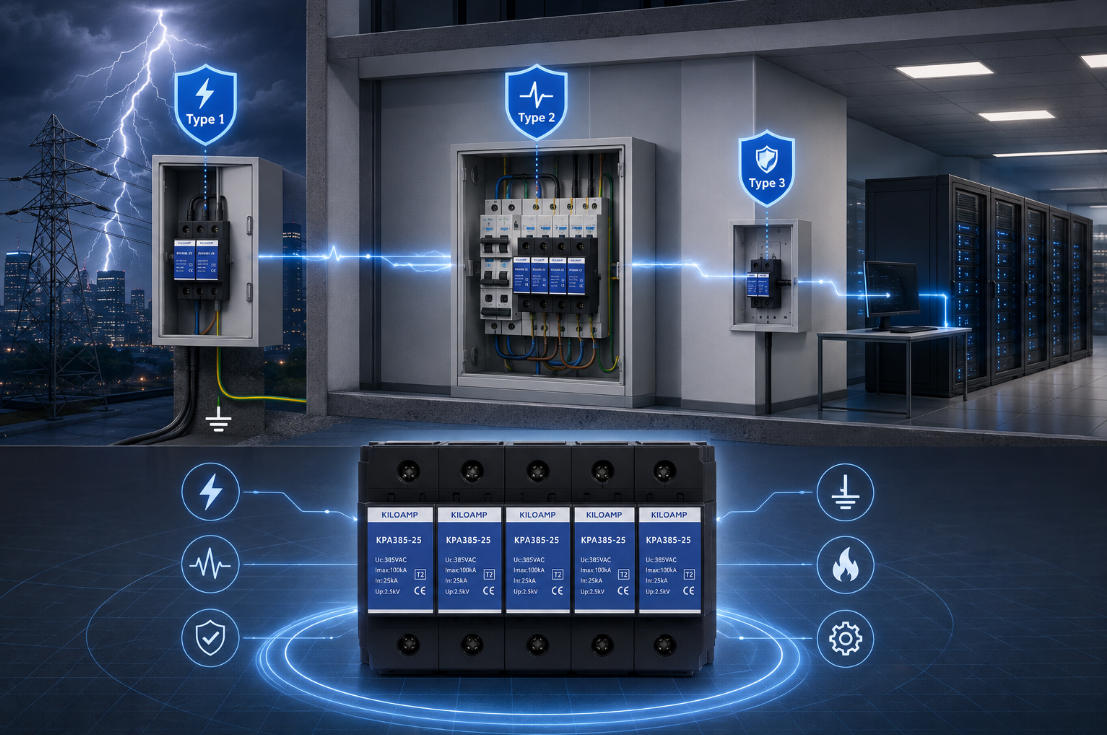
Surge protection devices (SPDs) are selected based on voltage levels, capacity, and installed at power entry points or distribution boxes.
Protection Level | Installation Position | SPD Specifications | Recommended Model |
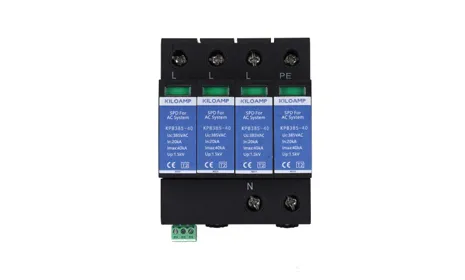
Primary | Low-voltage side of transformer | Switching-type SPD, ≥25kA (10/350μs), Up ≤2.5 kV | KILOAMP KPA385-2540R |
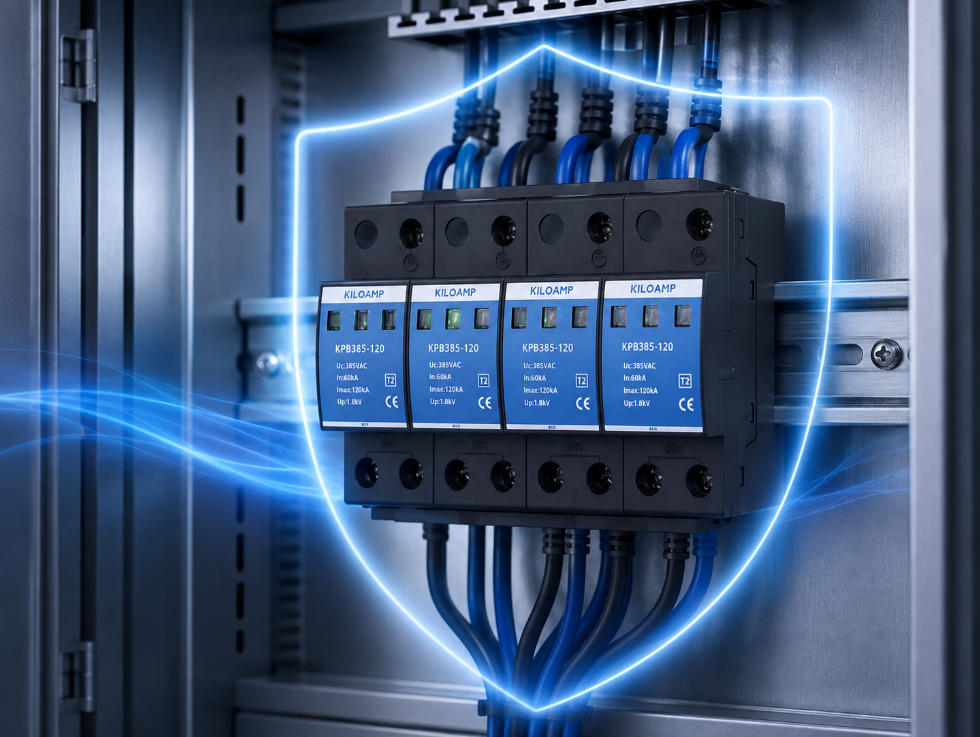
Secondary | Process segment distribution cabinets (Pumping stations, Sedimentation tanks, filters, Dosing rooms, etc.) | Voltage-limiting SPD, ≥100kA (8/20μs), Up ≤2.0 kV | KILOAMP KPB385-10040R |
Tertiary | Critical equipment (PLCs, Instruments, IP cameras) | Precision SPD, ≥40kA (8/20μs), Up ≤1.5 kV | KILOAMP KPB385-4040R |
Implementation Notes:
1. Maintain ≥10m spacing between primary and secondary SPDs; install a decoupling device if spacing is insufficient.
2. Series fuse (matched to SPD rated current) must be installed at SPD front ends.
3. Isolated transformers (≥5kV) are required for oil pump motors.
4. Grounding wires must be ≤50cm long, with cable cross-section ≥6 mm².
Automation control systems include PLC substations, industrial switches, instruments, valves, and pumps. Communication lines between PLCs and devices (e.g., RJ45, RS485, analog signals) must be protected with surge protectors matched to their protocols and interfaces. Both ends of signal lines (e.g., PLCs and instruments) require protection.
Equipment Type | Signal Type | Key Parameters | Recommended Model |
PLC Substation | Network | Uc: 5V, Imax: 5kA, auto-adaptive (10/100/1000Mbps), single port | KSE05-401 |
RS485 | Uc: 5V, Imax: 5kA, auto-adaptive (10/100/1000Mbps), rail-mounted | KSR24-201 | |
Analog | Uc: 5V, Imax: 5kA, auto-adaptive (10/100Mbps), single port, rail-mounted | KSA24-201 | |
Instruments (Flow, Level, Pressure) | Analog | Uc: 5V, Imax: 5kA, auto-adaptive (10/100Mbps), rail-mounted | KSA24-201 |
IP Camera | Network | Uc: 5V, Imax: 5kA, auto-adaptive (10/100/1000Mbps), single port | KSE05-401 |
Industrial Switch | Network | Uc: 5V, Imax: 5kA, auto-adaptive (10/100/1000Mbps), 8 ports | KSE05-408 |
Grounding:
Use hot-dip galvanized flat steel for grounding materials.
Enclosure casings, SPDs, and control cabinets must be grounded locally.
Grounding resistance should be ≤4Ω.
Shielding:
Separate power and signal lines.
Use galvanized steel conduits for cable shielding.
Protection Strategy: Combining shielding, grounding, and tiered SPD protection reduces lightning surge damage to ≤1%.
1. Power Distribution:
Three-tiered SPD protection (primary, secondary, tertiary).
Ensure proper spacing between SPDs and use decoupling devices if needed.
2. Automation Systems:
Match SPDs to communication protocols (RJ485/RS485/analog).
Protect both ends of signal lines.
3. Grounding:
Prioritize low-resistance grounding (≤4Ω).
Use galvanized steel for durability.
4. Shielding:
Separate power and signal lines.
Use metallic conduits for cable runs.
By integrating these measures, water treatment plants can achieve robust lightning surge protection, ensuring stable operations and minimizing risks.
Note: Customize grounding designs based on site-specific soil conditions. Regular inspections and maintenance are critical for long-term reliability.


 English