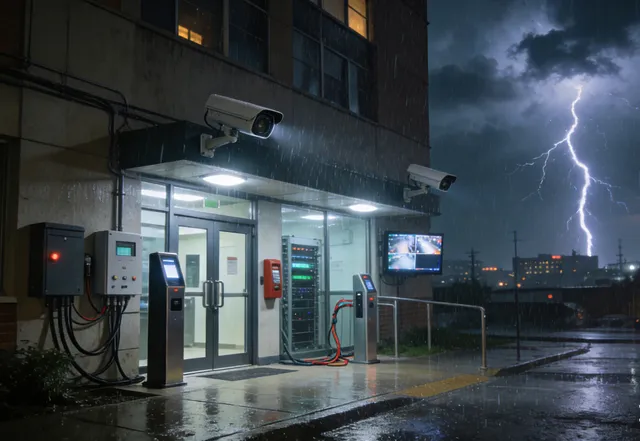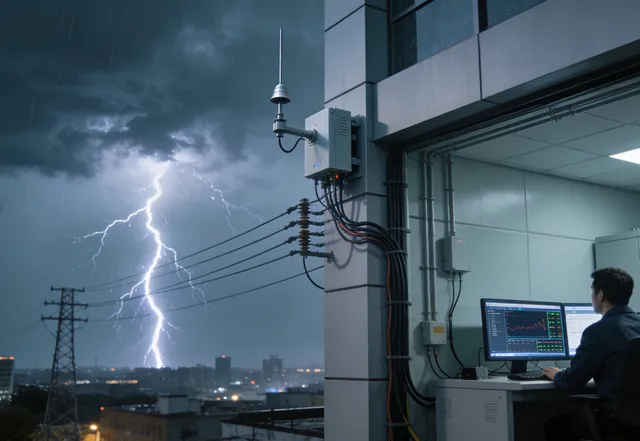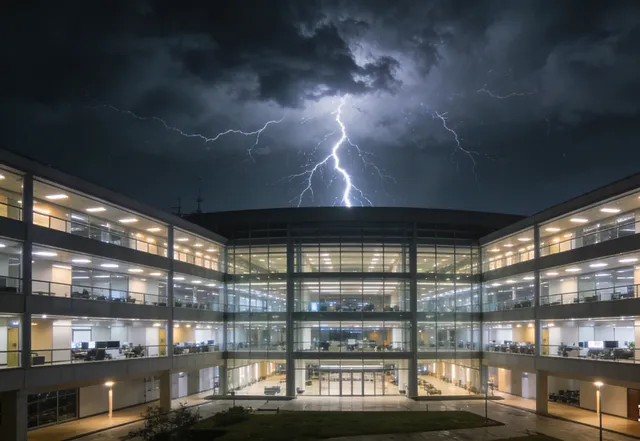


Building Integrated Photovoltaics (BIPV) integrates photovoltaic (PV) modules directly into building envelopes (e.g., roofs, facades, windows), merging power generation with architectural design. The BIPV power distribution system includes photovoltaic generation, energy storage, grid connection, and building electrical systems. Due to its exposure outdoors, BIPV is vulnerable to lightning strikes and surges. Effective lightning protection must address direct lightning strikes, shielding, proper cabling, and surge protection devices (SPDs) to minimize damage risks.
To protect BIPV systems from direct lightning strikes:
Install lightning rods, straps, or utilize metallic PV frame/border as air terminals to prioritize the discharge of lightning current.
Ensure reliable electrical connections between metallic PV racks, module frames, and the building’s lightning arresters, forming an integrated lightning current conduction network.
The grounding system for BIPV must address the following:
Common Earthing System: Combine the PV system’s grounding with the building’s lightning protection and electrical grounding networks to reduce potential differences.
Equipotential Bonding: Connect metallic components (e.g., PV racks, inverters, distribution cabinets) to the grounding system to prevent step voltage during lightning strikes.
Ground Resistance: Typically requires ≤4Ω (adhering to local standards such as IEC 62305).
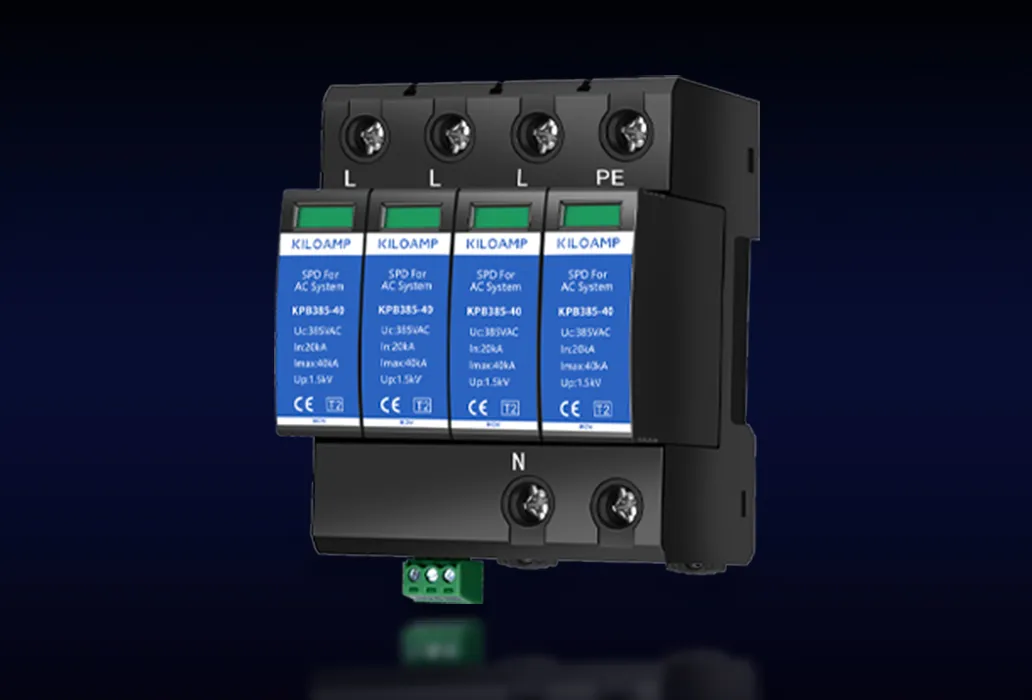
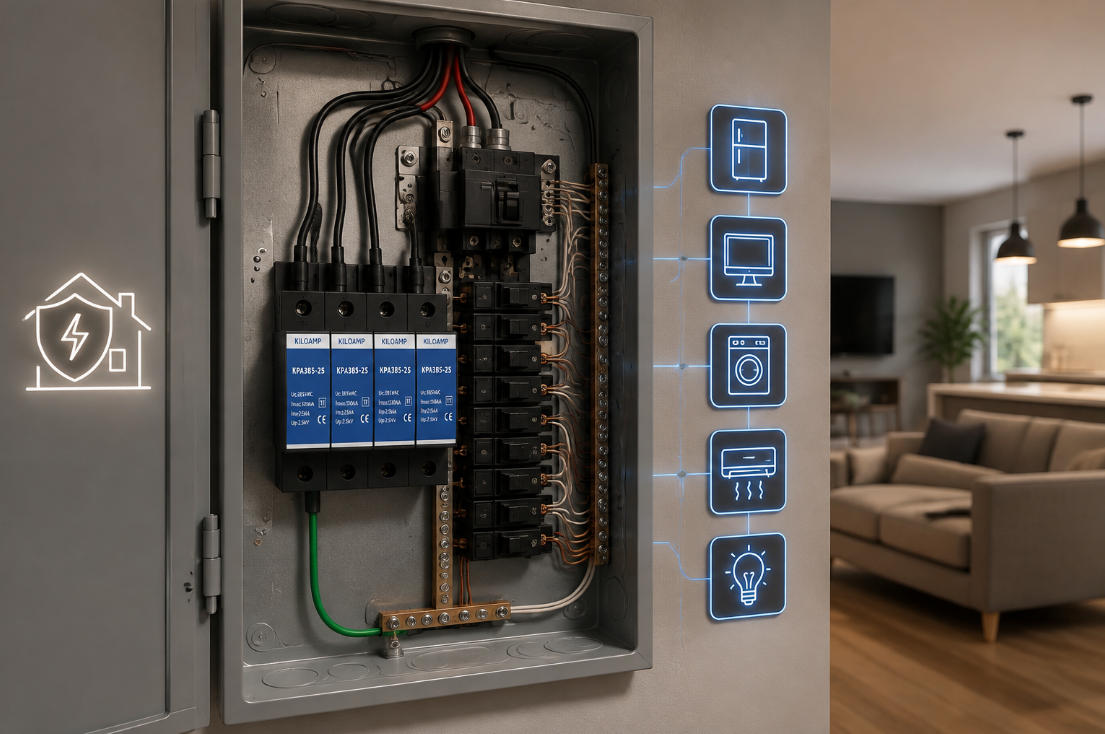
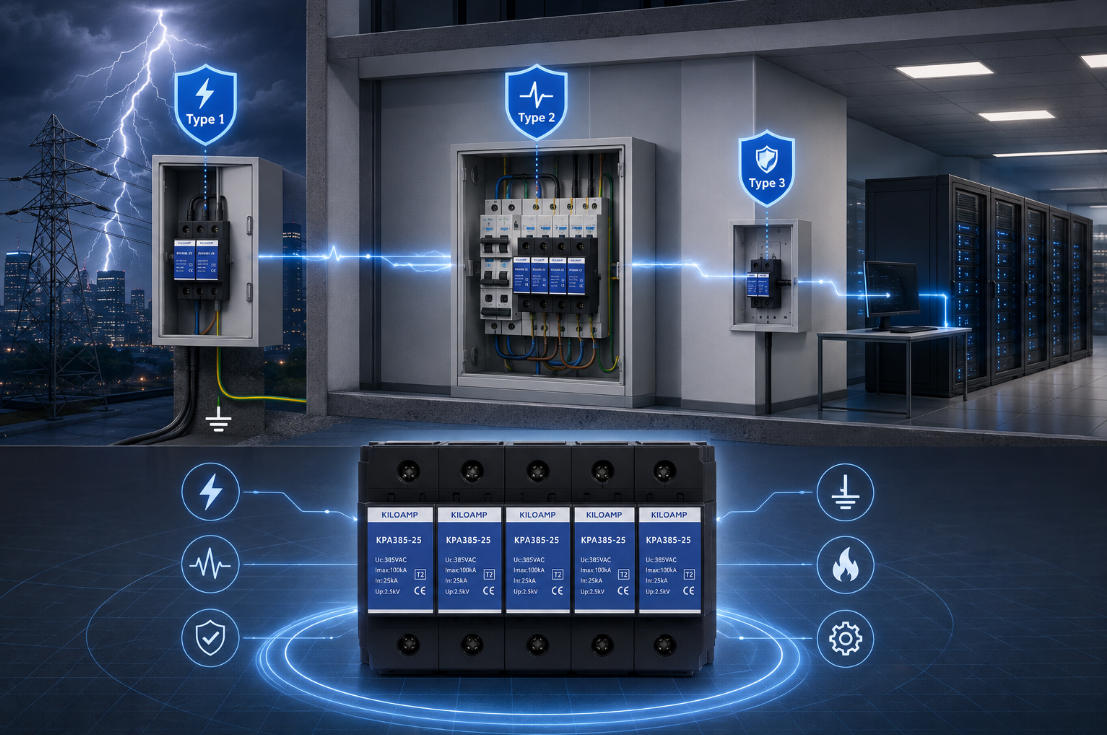
A multi-level SPD protection strategy is implemented based on the distribution system hierarchy and lightning risk levels. BIPV SPDs are categorized into four protection levels:
Protection Level | Protected Components | SPD Type & Model |
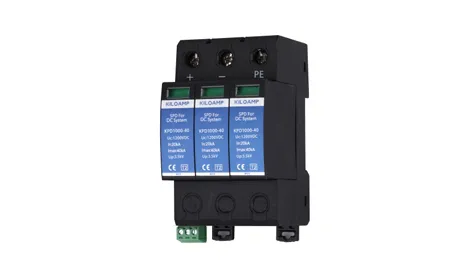
Level 1 (Primary) | Grid connection box, combiner box | KILOAMP KPG440-25 (isolated AC SPD for grid boxes); KILOAMP KPD1500-40 (high-voltage DC SPD for combiner boxes/PV modules). |
Level 2 (Secondary) | Inverter DC/AC sides | KILOAMP KPD1500-40 (DC input port); KILOAMP KPB385-40 (AC output port). |
Level 3 (Tertiary) | Energy storage system (e.g., Li-ion batteries) | KILOAMP KPD1500-40 (high-voltage DC SPD for battery cluster circuits). |
Level 4 (Quaternary) | Communication interfaces | KILOAMP KSE05-401 (RJ45 network ports); KILOAMP KSC24-201 (RS485 signal lines). |
Key Requirements:
All SPDs must have remote signaling interfaces integrated into the monitoring platform for real-time status updates.
Regular inspections are required to replace damaged SPD modules and test grounding resistance.
SPD Selection:
Grid Connection Box: KILOAMP KPG440-25 (25kA, 1.3kV residual voltage) for AC-side protection.
Combiner Box: KILOAMP KPD1500-40 (40kA, 1500V DC) with fast fuse functionality to prevent PV module reverse breakdown.
Energy Storage Systems: KILOAMP KPD1500-40 (operating temperature range: -40°C to 85°C) for battery circuit protection.
Communication Interfaces: KILOAMP KSE05-401 (supports 1Gbps network speed) and KSC24-201 for signal integrity.
Maintenance Protocol:
Quarterly inspection of SPD status indicators (replace if window turns red).
Annual pre-rainy-season testing of SPD response time (≤25ns) and leakage current (≤50μA).
Ground resistance testing and soil resistivity analysis to ensure compliance with standards.
Effective lightning protection for BIPV systems requires a three-pronged approach: direct lightning protection as the foundation, multi-level SPDs as the core, and intelligent operation and maintenance as the safeguard. Compliance with international standards (IEC 62305 for lightning protection and IEC 61643 for surge protection) and customization to building structures are critical. By integrating reliable SPDs like the KILOAMP series, BIPV systems can significantly reduce lightning risks, extend lifespan, and support sustainable development in green architecture.


 English