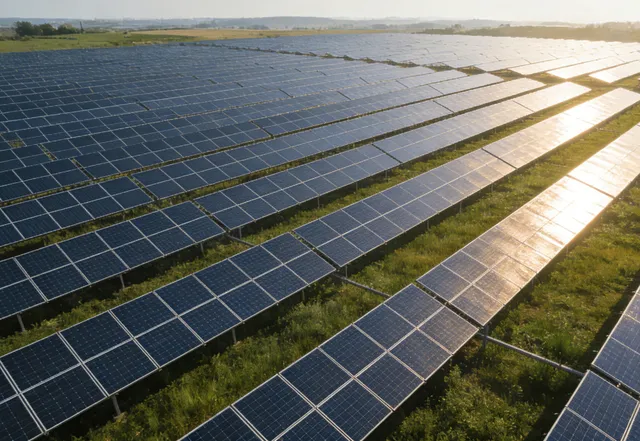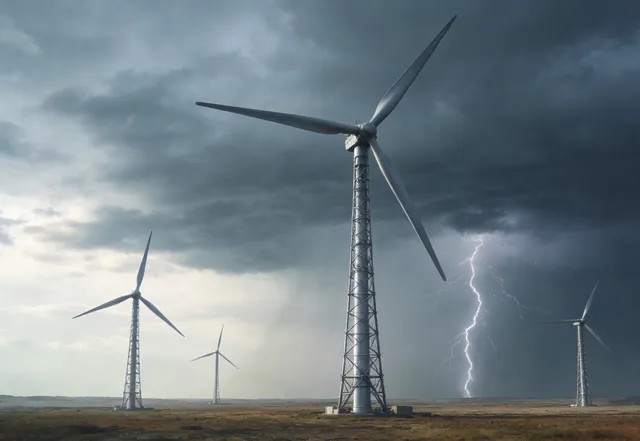


Power plants, including coal, hydropower, nuclear, wind, and solar facilities, are critical infrastructure for converting primary energy into electricity, providing essential power support for economic and social development. However, lightning surges can cause severe disruptions, from power outages to casualties.
From a lightning protection perspective, coal-fired, gas, and nuclear power plants share common protection requirements. Their lightning measures primarily involve grounding, shielding, isolation, and voltage limitation to divert lightning overvoltages and electromagnetic pulses (LEMP) to the earth or limit their impact on electrical equipment. The external lightning protection system captures and conducts lightning currents into the ground, while the internal system prevents LEMP from entering or spreading within the facility through shielding, isolation, and grounding.
The external system safely channels lightning currents to the ground, preventing direct strikes.
1.1 Lightning Receptors
Lightning Rods:
Installed on high points such as chimneys or cooling towers, with heights ≥30 meters, ensuring coverage of critical equipment.
Protection radius calculated using the滚球法 (Rolling Sphere Method), covering ≥500 m².
Lightning Belts/Grilles:
Installed along building edges and rooftops, forming a grid structure with spacing ≤10×10 meters.
1.2 Down Conductors
Material: Galvanized round or flat steel, cross-sectional area ≥35 mm², ensuring conductivity and corrosion resistance.
Installation: At least 2 conductors along exterior walls, spaced ≤18 meters apart, to ensure even current distribution.
Connection points treated against oxidation, with regular corrosion checks.
1.3 Grounding System
Grounding Electrodes:
Horizontal and vertical electrodes (buried depth ≥0.8 meters) made of galvanized steel, with a lifespan ≥20 years.
Ground Resistance:
≤4Ω. In high-resistance soils, use resistivity reducers (e.g., carbon powder) or additional electrodes.
Annual resistance testing before the rainy season to ensure compliance.
Internal protection minimizes LEMP damage through shielding, isolation, equipotential bonding, and surge protective devices (SPDs).
2.1 Shielding and Isolation Measures
Cable Installation:
Power cables use armored or steel-pipe conduits, grounded at both ends, to reduce induced overvoltages.
Shielding layers added to critical areas like control rooms and cable trenches.
Equipotential Bonding:
All metallic components (e.g., racks, equipment housings) connected via copper bars or wires to the grounding system to eliminate potential differences.
2.2 SPD Configuration (IEC 61312 Standard)
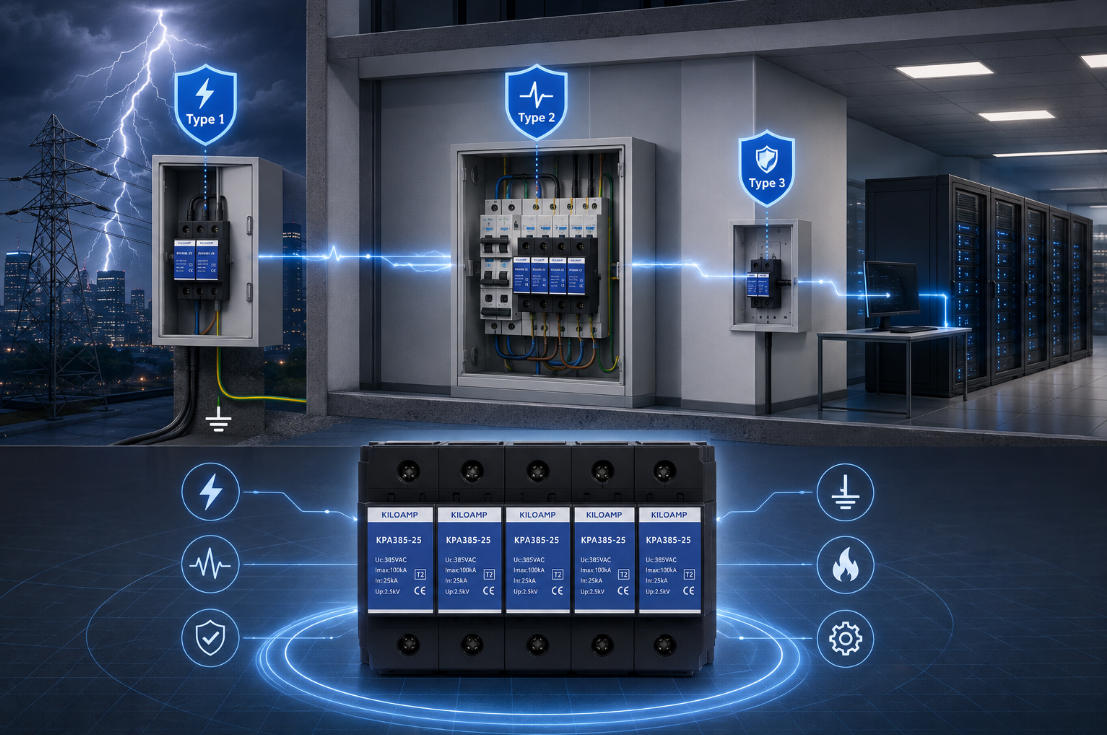
A three-tier protection strategy is implemented:
Protection Level | Installation Location | SPD Type | Technical Specifications |
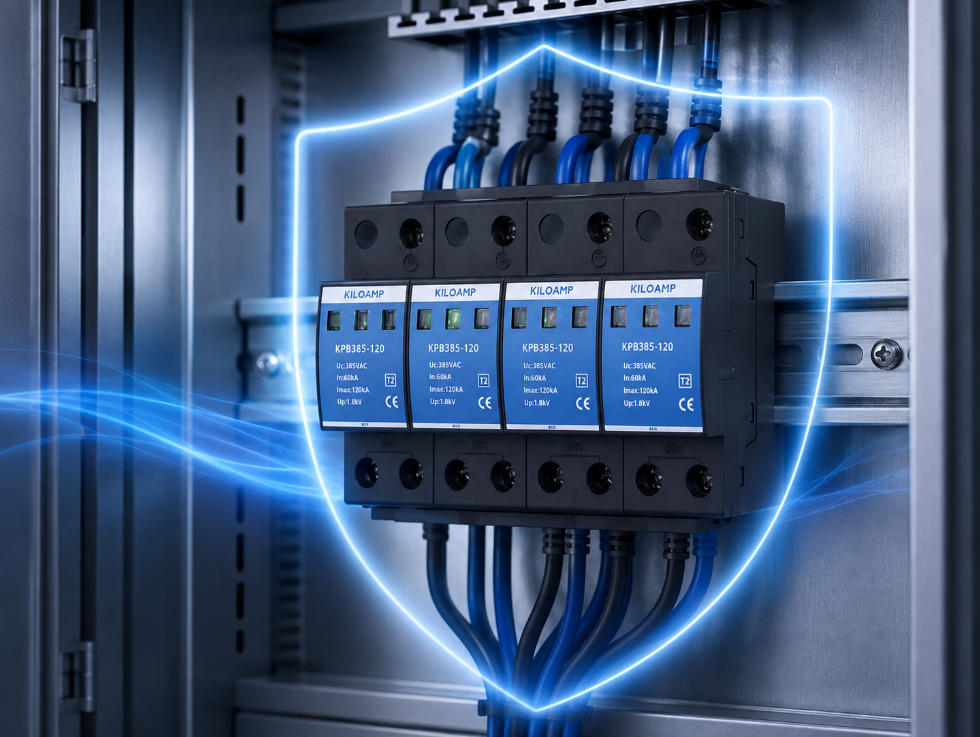
Level 1 (Primary) | Main Distribution Cabinet | T1 Modular SPD | KILOAMP KPA275-25: Iimp ≥25kA (8/20μs), In ≥100kA, residual voltage ≤2.5kV. |
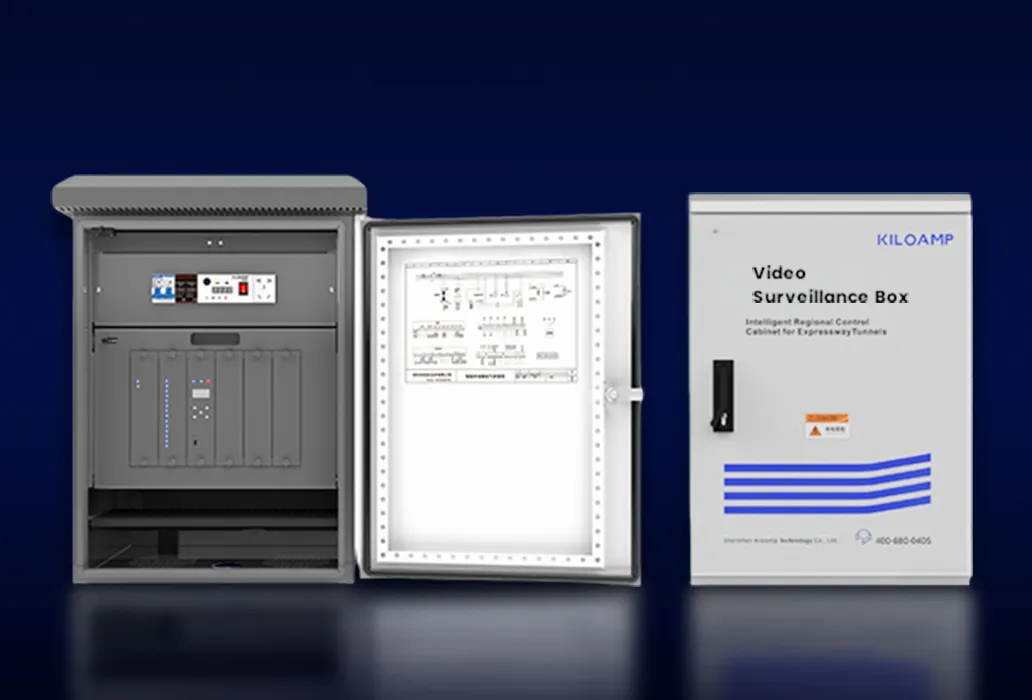
Level 2 (Secondary) | Branch Distribution Cabinet | B-Class SPD Box | KILOAMP KPB275-100: Imax ≥100kA, response time ≤25ns, coordinated with circuit breakers. |
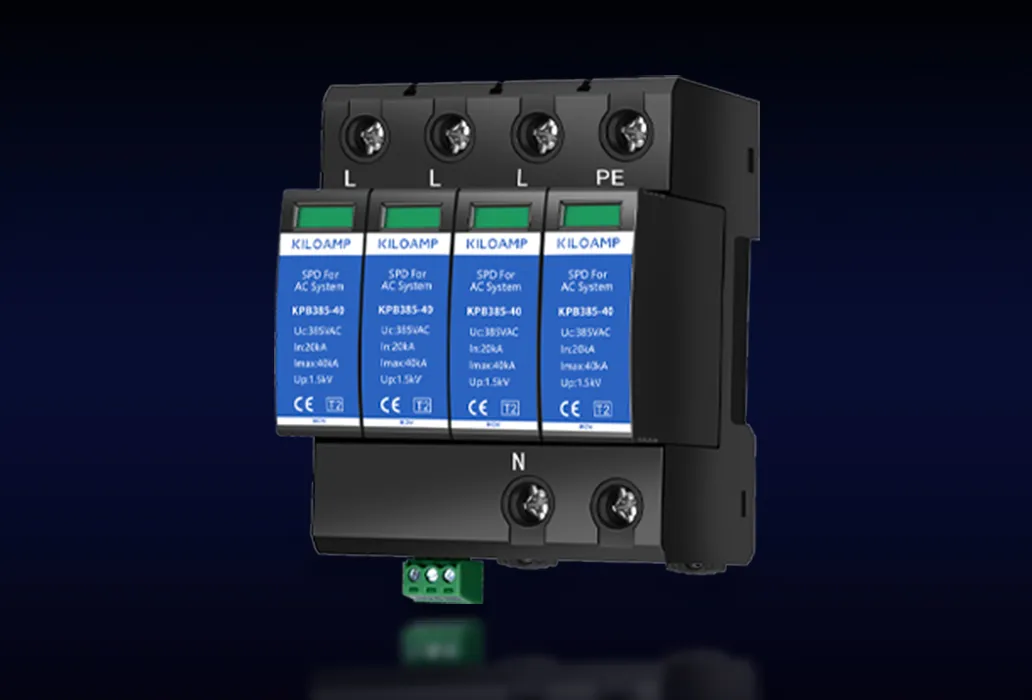
Level 3 (Tertiary) | Critical Equipment Front | C-Class Modular SPD | KILOAMP KPB275-40: Imax ≥40kA, IP65-rated, rail-mounted, protects precision equipment. |
2.3 Key Subsystem Protections
(1) Power Distribution System
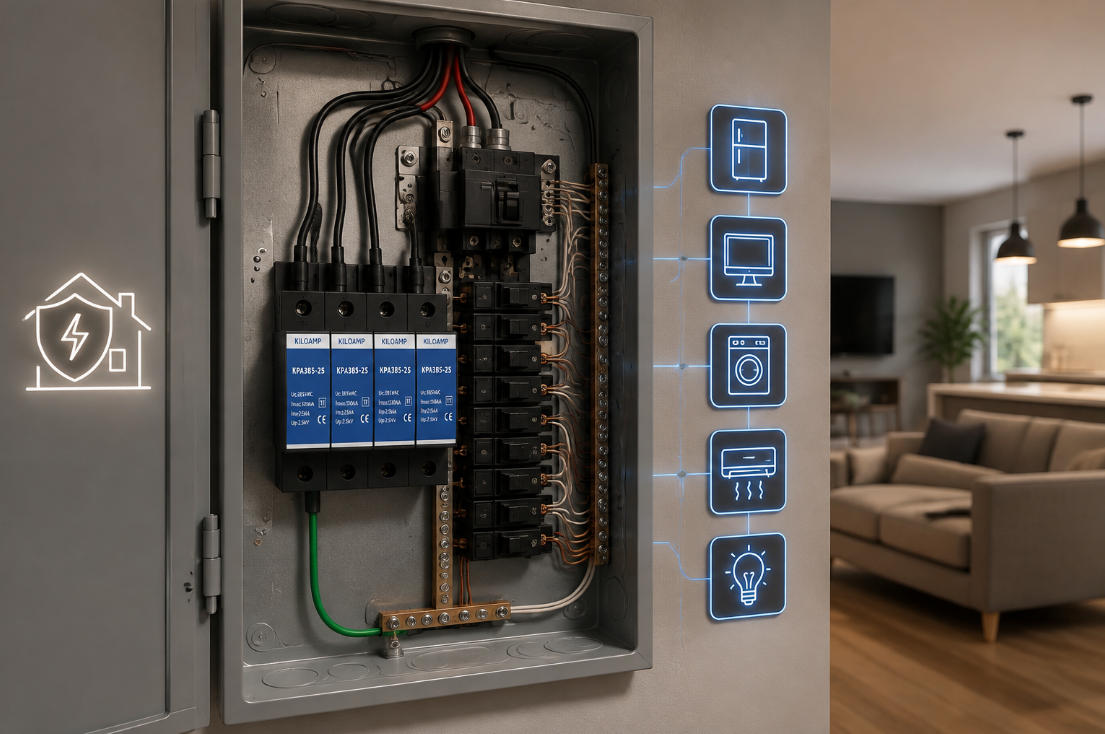
Main Cabinet: T1 SPD (KILOAMP KPA275-25) to suppress incoming surges.
Branch Cabinets: B-class SPD (KILOAMP KPB275-100) for further voltage reduction.
Equipment Front: C-class SPD for transformers, circuit breakers, etc.
(2) Thermal Control System
Industrial Switches:
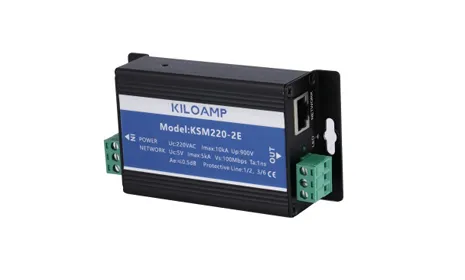
Network SPD: KILOAMP KSE05-401, supporting 10/100/1000Mbps, Imax ≥5kA.
PLC/DCS Controllers:
Signal SPD: KILOAMP KSC24-201, RS485/RS232 interfaces, Imax ≥10kA, operates at -40°C~85°C.
Field Transmitters:
Outdoor SPD: Imax ≥10kA, IP65-rated, withstands harsh environments.
(3) Security System
IP Cameras (IPC):
Power Protection:
Adapter Front: KILOAMP KPG440-25 (110-240VAC input, Imax ≥25kA).
Adapter to Camera: 12VDC/24VAC-specific SPD (Imax ≥10kA).
PoE Power Protection:
Complies with IEEE 802.3af/at/bt standards, supports 60W power and 1Gbps transmission.
This system uses IoT technology for real-time monitoring of lightning protection devices, enhancing operational efficiency.
3.1 Monitoring Scope
External Monitoring:
Lightning receptor parameters (peak current, polarity, waveform).
Ground resistance (±1% accuracy, remote-readable).
Internal Monitoring:
SPD status: number of strikes, degradation rate, response time.
Data transmission via 4G/LoRa networks to a central control center for GIS-mapped visualization.
3.2 Alerts and Maintenance
Alarm Mechanisms:
Triggers warnings (SMS/email) if resistance >4Ω or SPD degradation >80%.
Records lightning events and generates trend reports.
Smart Maintenance:
Predicts SPD lifespan via degradation data to plan replacements.
Reduces manual inspections by 30%+ and lowers operational costs.
Power plant lightning protection follows the "external interception, internal protection, intelligent monitoring" principle:
1. External Protection: Lightning receptors, down conductors, and grounding systems divert direct strikes.
2. Internal Protection: Tiered SPDs, shielding, and equipotential bonding safeguard equipment.
3. Smart Monitoring: Real-time data and predictive analytics shift from reactive to proactive defense.
Case Validation: A coal-fired plant adopting this solution reduced lightning-induced outages by 70%, extended SPD lifespan to 5 years, and cut annual maintenance costs by 25%. Future advancements in AI and edge computing will further enhance system resilience and predictive capabilities.


 English