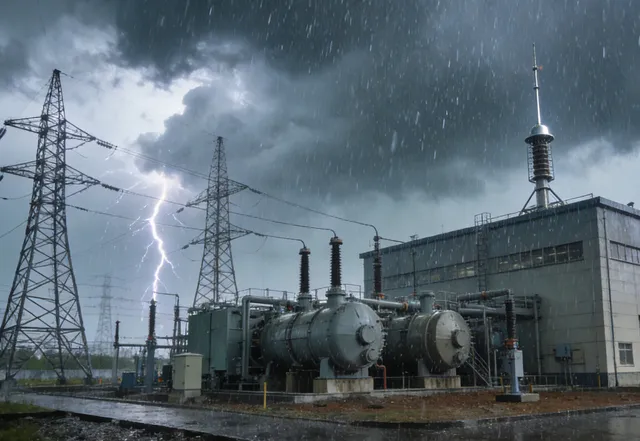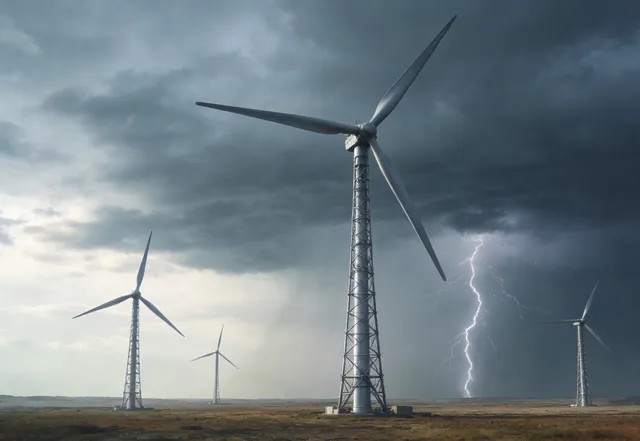


Photovoltaic (PV) systems, installed on rooftops or open outdoor areas, are highly vulnerable to lightning strikes. Lightning damages equipment through direct strikes, electromagnetic pulses (LEMP), and induced surges. Direct lightning strikes can destroy PV modules and inverters, while induced LEMP infiltrates equipment via wiring, damaging electronic components. Therefore, a comprehensive protection strategy integrating external lightning protection, internal surge suppression, and intelligent monitoring is essential to ensure safe operation.
1. Lightning Receptors
Construct a lightning arrestor network using PV racks and metal frames to guide current to the ground.
Install lightning rods (≥30 meters tall) at elevated points to protect critical equipment within their coverage area.
2. Down Conductors
Use the metal structure of PV racks as down conductors to ensure rapid current transfer to the grounding system.
3. Grounding System
Install a composite grounding grid (horizontal and vertical electrodes) with a ground resistance ≤4Ω.
In high-resistance soils, use resistivity reducers or additional grounding electrodes.
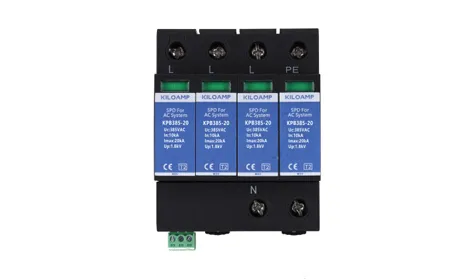
Internal protection focuses on shielding, equipotential bonding, and SPD (Surge Protective Device) configuration across DC, AC, and communication interfaces.
1. DC-Side Protection
Combiner Boxes: Install KILOAMP KPD1500-25 high-voltage DC SPDs to suppress overvoltages.
DC Distribution Cabinets: Add C-class SPDs (KILOAMP KPD1500-40) to prevent overcurrent from entering inverters.
2. AC-Side Protection
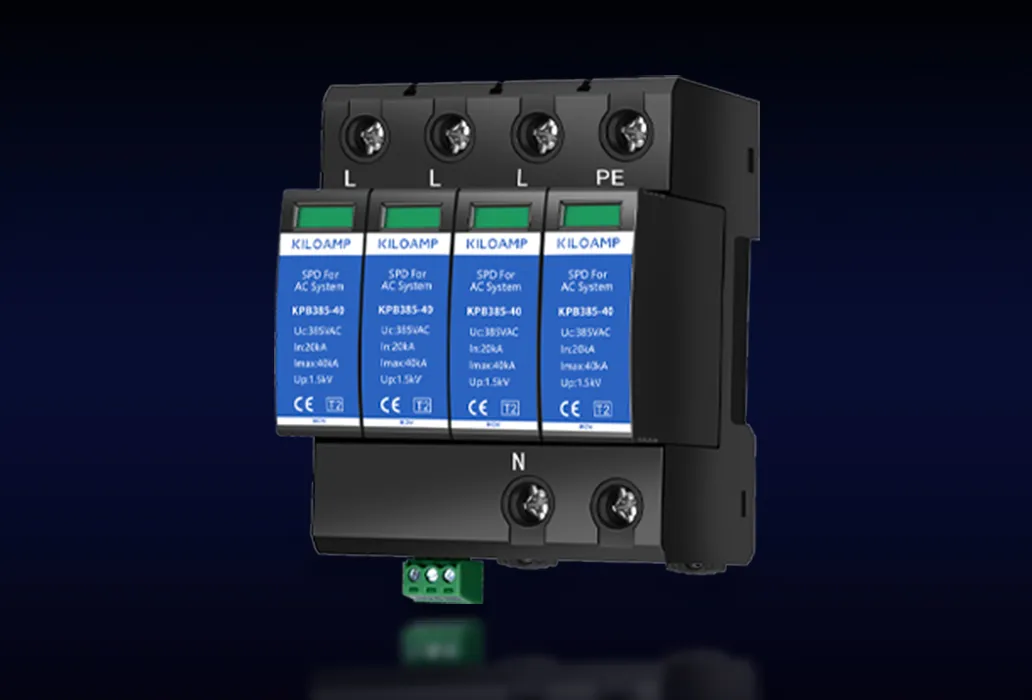
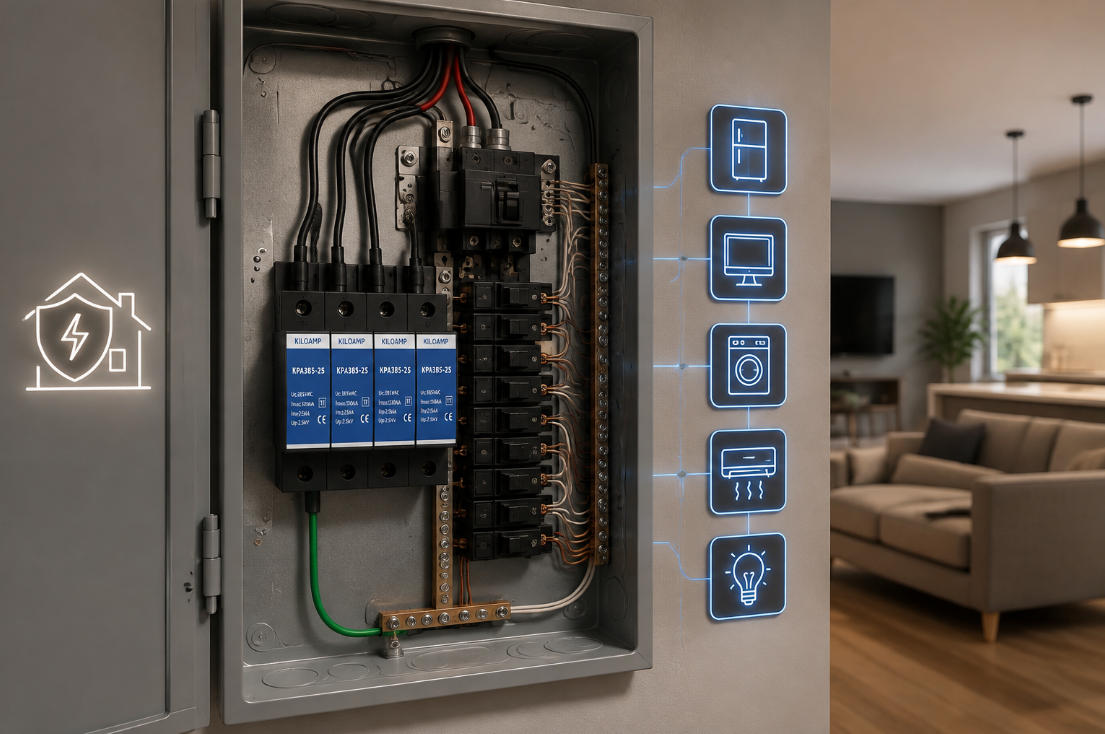
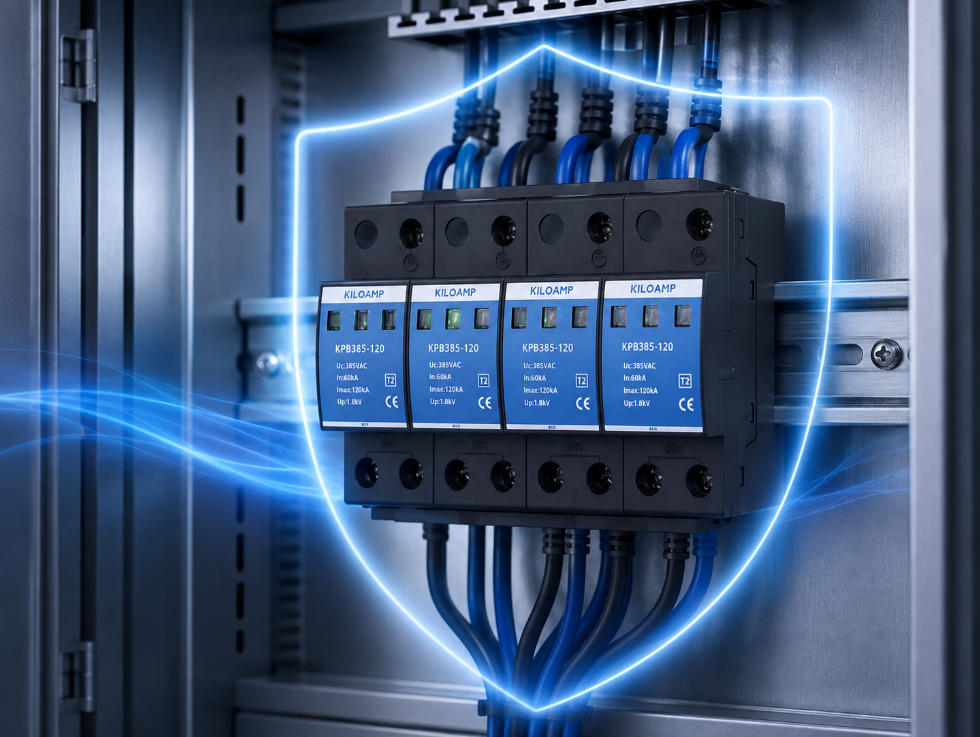
Inverters: Mount KILOAMP KPB440-40 three-phase SPDs on AC output terminals.
AC Distribution Cabinets:
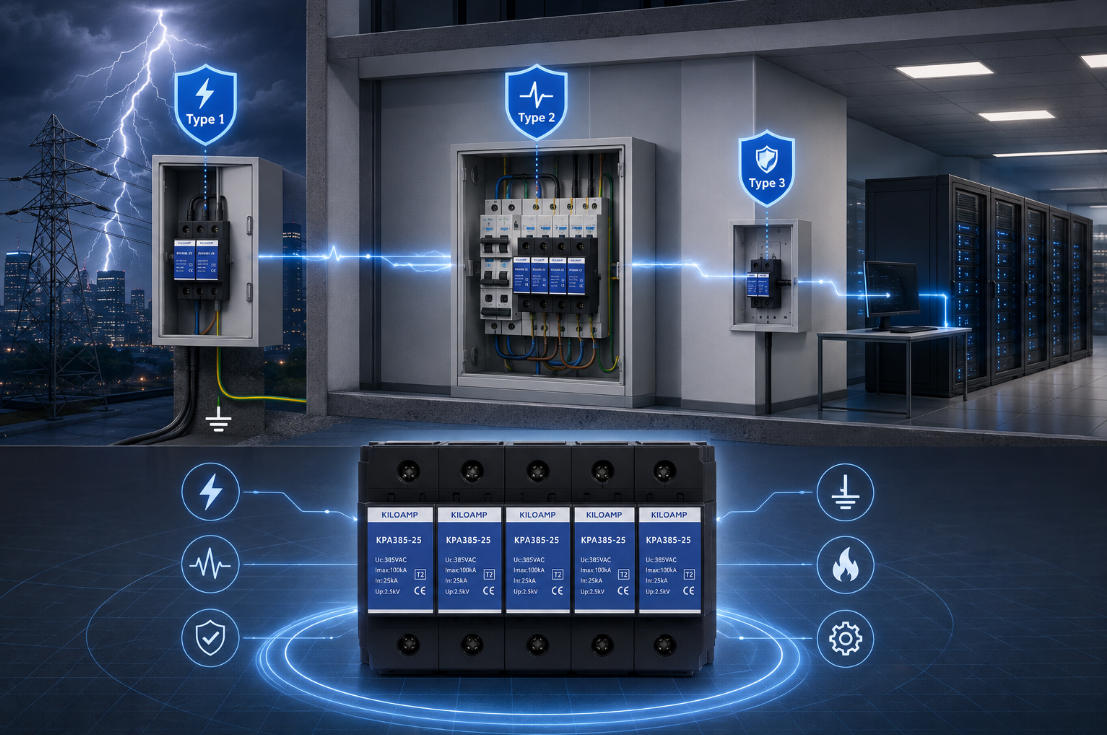
Primary Protection (Inlet): KILOAMP KPA440-25.
Secondary Protection (Outlet): KILOAMP KPB440-100, forming a multi-tier defense.
3. Communication Port Protection
Network Interfaces: KILOAMP KSE05-401 protects RJ45 ports on network switches and devices.
RS485 Interfaces: KILOAMP KSC24-201 safeguards RS485 ports on inverters, combiner boxes, and monitoring systems.
This system uses IoT technology for real-time monitoring and predictive maintenance:
1. Monitoring Scope
External Systems:
Lightning receptor parameters (peak current, polarity, waveform).
Ground resistance (±1% accuracy).
Internal Systems:
SPD status (number of strikes, degradation rate, response time).
Ground grid resistance.
2. Data Management
Transmit data via 4G/LoRa networks to a central control center for GIS-mapped visualization.
Issue alerts (SMS/email) for excessive ground resistance or SPD degradation (>80%).
3. Maintenance & Analytics
Automatically log lightning events and generate trend reports.
Predict SPD lifespan to plan replacements, reducing manual inspections by 30%.
1. Installation Requirements
Secure SPDs firmly; ground wires must be short and directly connected to the busbar.
Bury grounding electrodes in low-resistivity soil, using corrosion-resistant materials for grounding wires.
2. Acceptance Criteria
Verify SPD models, ground resistance (≤4Ω), and conduct simulated lightning surge tests.
3. Routine Inspections
Check SPD indicators, ground resistance, and physical condition annually before the rainy season.
Maintain records of inspections and replacements in a centralized archive.
Photovoltaic lightning protection follows the "external interception, internal protection, intelligent monitoring" principle:
External Protection: Diverts direct lightning via receptors, conductors, and grounding.
Internal Protection: Blocks overvoltages via SPDs and equipotential bonding.
Smart Monitoring: Enables real-time SPD and ground status tracking, shifting from reactive to proactive defense.
Case Validation: A PV plant adopting this solution reduced lightning-induced downtime by 60%, extended SPD lifespan to 5 years, and cut maintenance costs by 30%. Future integration of AI algorithms will enable adaptive adjustments and predictive maintenance for enhanced system resilience.


 English